Author: Spencer Caldwell, NBC-HWC, CHC

  • Best Tech Gadgets in 2026: Must-Have Technology

    Best Tech Gadgets in 2026: Must-Have Technology

    Table of Contents


    Tech gadgets represent innovative electronic devices designed to enhance daily life through advanced functionality, connectivity, and user experience optimization. The global consumer electronics market reached $1.8 trillion in 2026, reflecting our increasing reliance on smart technology solutions that seamlessly integrate into modern lifestyles.

    Key Takeaways: The best tech gadgets in 2026 span every budget from under $50 to premium investments, with particular growth in accessibility devices, sustainable options, and remote work productivity tools. Modern tech gadgets have evolved from basic electronics to AI-powered smart devices that anticipate user needs and adapt to individual preferences.

    What are tech gadgets and why do they matter in 2026?

    The tech gadgets meaning encompasses innovative electronic devices that solve specific problems, enhance productivity, or provide entertainment through cutting-edge technology integration. These devices have evolved dramatically from simple electronic tools to sophisticated AI-powered assistants that learn user preferences and adapt accordingly.

    The significance of tech gadgets in 2026 extends beyond mere convenience. According to the Consumer Technology Association’s latest market analysis, consumer spending on technology devices increased 8.2% annually, driven by innovations in artificial intelligence, sustainable manufacturing, and accessibility features. Modern gadgets serve as bridges between physical and digital experiences, enabling seamless connectivity across work, health, and entertainment domains. However, with increased connectivity comes the importance of implementing essential cybersecurity measures to protect personal data across all connected devices.

    The transformation from basic electronics to intelligent devices represents a fundamental shift in how we interact with technology. Today’s gadgets anticipate needs, provide personalized recommendations, and integrate with smart home ecosystems to create cohesive digital environments that enhance quality of life across all demographics.

    What are the best tech gadgets for different budgets?

    Budget considerations directly impact gadget selection quality and feature availability, with price points typically determining processing power, build materials, and advanced functionality integration. Consumer spending patterns reveal that households allocate an average of $1,400 annually to technology purchases, distributed across various price categories to meet different needs and preferences.

    The gadget market spans from ultra-affordable solutions under $25 to premium devices exceeding $2,000, each tier offering distinct value propositions. Budget-conscious buyers can access impressive functionality through carefully selected devices that prioritize essential features over premium materials or advanced specifications. Meanwhile, premium investments often provide superior durability, cutting-edge features, and extended manufacturer support that justifies higher initial costs.

    Understanding budget-to-value relationships helps consumers make informed decisions about which features matter most for their specific use cases, ensuring optimal satisfaction regardless of spending limits.

    Cool tech gadgets under $50 for budget-conscious buyers

    Affordable tech gadgets under $50 deliver impressive functionality through strategic feature prioritization and efficient manufacturing processes that maintain quality while reducing costs. This price segment has experienced remarkable innovation, with manufacturers leveraging economies of scale and streamlined designs to offer previously premium features at accessible price points.

    Premium tech gadgets worth the investment

    Premium tech gadgets justify higher costs through superior build quality, advanced features, extended warranties, and cutting-edge technology that provides long-term value and enhanced user experiences. These devices typically incorporate the latest processors, premium materials, and innovative design elements that set industry standards for performance and reliability.

    Which tech gadgets are best for remote work productivity?

    Remote work productivity gadgets focus on enhancing communication, organization, ergonomics, and technical capabilities to create efficient home office environments that rival traditional workplace setups. The shift to hybrid and remote work models has driven demand for specialized devices that address unique challenges of working from home or distributed locations.

    The remote work technology landscape encompasses everything from high-quality webcams and noise-canceling headphones to ergonomic keyboards and portable monitors. These tools directly impact productivity levels, professional presentation, and overall work satisfaction. Studies indicate that workers with optimized home office setups report 23% higher productivity and 19% improved job satisfaction compared to those using basic equipment. For comprehensive guidance on building an effective remote workspace, our essential home office technology guide provides detailed recommendations for creating professional-grade work environments.

    Essential gadgets for home office setups

    Home office essential gadgets prioritize ergonomics, video conferencing quality, and productivity enhancement to create professional workspaces that support long-term health and performance. The foundation of any effective home office includes proper lighting, adjustable seating, and high-quality audio-visual equipment for seamless virtual collaboration.

    Modern home offices benefit significantly from AI-powered productivity solutions that automate routine tasks and enhance workflow efficiency. These tools integrate seamlessly with traditional office gadgets to create intelligent workspaces that adapt to individual work patterns and preferences.

    Portable tech for digital nomads

    Digital nomad gadgets emphasize portability, battery life, durability, and connectivity to enable productive work from any location while maintaining professional standards and reliable performance. The digital nomad lifestyle requires carefully selected technology that balances functionality with travel-friendly design constraints.

    What are the top tech gadgets for men in 2026?

    Tech gadgets for men in 2026 span diverse categories including fitness tracking, smart home automation, gaming equipment, and productivity tools designed to enhance lifestyle and professional capabilities. Market research indicates that male consumers prioritize performance specifications, build quality, and integration capabilities when selecting technology purchases.

    How do accessibility and disability support tech gadgets work?

    Accessibility tech gadgets utilize assistive technologies, adaptive interfaces, and specialized hardware to remove barriers and enable full participation in digital experiences for users with diverse abilities and needs. The assistive technology market has grown 340% since 2020, reflecting increased awareness and improved technological capabilities.

    Vision and hearing assistance gadgets

    Vision and hearing assistance gadgets employ advanced sensors, AI processing, and adaptive output methods to provide alternative ways of accessing information and interacting with digital content. These devices range from smart glasses with real-time text-to-speech capabilities to hearing aids with smartphone integration and environmental sound enhancement.

    Mobility and motor function support devices

    Mobility support gadgets leverage voice control, gesture recognition, and adaptive input methods to enable full device interaction regardless of physical limitations or motor function variations. Innovation in this space includes eye-tracking interfaces, breath-controlled navigation, and AI-powered predictive text systems.

    Which sustainable and eco-friendly tech gadgets should you consider?

    Sustainable tech gadgets incorporate recycled materials, energy-efficient designs, and circular economy principles to minimize environmental impact while delivering comparable performance to traditional electronics. The eco-friendly technology sector has achieved 12% annual growth as consumers increasingly prioritize environmental responsibility in purchasing decisions.

    Solar-powered and energy-efficient devices

    Solar-powered gadgets harness renewable energy to reduce grid dependence and operating costs while providing reliable functionality for outdoor activities, emergency preparedness, and off-grid applications. Modern solar technology achieves 22% efficiency rates in portable form factors, making solar charging viable for everyday device use.

    Recycled materials and circular economy gadgets

    Circular economy gadgets utilize recycled plastics, refurbished components, and modular designs that enable repair and upgrading rather than complete device replacement when technology advances. These products demonstrate that environmental responsibility doesn’t require compromising on performance or features.

    What unique tech gadgets stand out from mainstream options?

    Unique tech gadgets offer specialized functionality, innovative form factors, or niche applications that address specific needs not covered by mainstream consumer electronics. These devices often emerge from crowdfunding platforms, startup innovation, or specialized industry requirements that eventually find broader consumer appeal.

    How to properly maintain tech gadgets for maximum longevity?

    Proper tech gadget maintenance involves regular cleaning, appropriate storage, software updates, and protective measures that extend device lifespan and maintain optimal performance throughout the ownership period. Research shows that well-maintained devices last 40% longer than those receiving minimal care, significantly improving return on investment.

    Daily care and cleaning routines

    Daily maintenance routines include gentle cleaning with appropriate materials, proper charging practices, and environmental protection to prevent damage from dust, moisture, and temperature extremes. Consistent daily care prevents minor issues from developing into major problems that require expensive repairs or premature replacement.

    Storage and handling best practices

    Optimal storage and handling involve using protective cases, maintaining appropriate temperature and humidity levels, and following manufacturer guidelines for long-term storage and transportation. Proper handling techniques significantly reduce the risk of physical damage and component failure over time.

    Where to find the best tech gadgets store options?

    The best tech gadgets stores combine competitive pricing, authentic products, reliable customer service, and comprehensive warranties to ensure positive purchasing experiences and long-term satisfaction. The retail landscape includes traditional electronics stores, online marketplaces, manufacturer direct sales, and specialized boutique retailers, each offering distinct advantages for different purchasing preferences.

    When shopping for connected devices and smart home gadgets, it’s crucial to consider retailers that prioritize security and provide guidance on protecting your connected home environment from potential cyber threats. Reputable stores often provide security setup assistance and educational resources to help customers safely integrate new devices into their existing networks.

    Frequently Asked Questions About Tech Gadgets

    What makes a device qualify as a “tech gadget”?

    A device qualifies as a tech gadget when it incorporates electronic components, digital interfaces, or smart functionality to solve problems or enhance experiences beyond what traditional mechanical devices can achieve. The distinction typically involves connectivity, programmability, or advanced sensor integration that enables adaptive or intelligent behavior.

    How often should I upgrade my tech gadgets?

    Optimal upgrade timing depends on device performance, software support lifecycle, and individual needs rather than arbitrary time intervals, with most gadgets providing 3-5 years of effective service before requiring replacement. Factors influencing upgrade decisions include security update availability, compatibility with new software, and whether current functionality meets evolving requirements.

    Are expensive tech gadgets always better than budget options?

    Expensive gadgets often provide superior build quality, advanced features, and longer support lifecycles, but budget options can offer excellent value when their capabilities match user requirements without unnecessary premium features. The key is matching device capabilities to actual usage patterns rather than automatically assuming higher prices guarantee better satisfaction.

    How can I tell if a tech gadget is compatible with my existing devices?

    Compatibility verification involves checking operating system requirements, connectivity standards, app availability, and protocol support to ensure seamless integration with existing device ecosystems. Most manufacturers provide detailed compatibility lists and system requirements that help consumers make informed decisions before purchasing.

    What should I do with old tech gadgets when upgrading?

    Responsible disposal of old gadgets involves data wiping, recycling through certified e-waste programs, donation to charitable organizations, or trade-in programs that maximize value while minimizing environmental impact. Many manufacturers and retailers offer take-back programs that ensure proper recycling and sometimes provide credit toward new purchases.

    How do I protect tech gadgets from damage and theft?

    Protection strategies include using appropriate cases and screen protectors, enabling device tracking and remote wipe capabilities, purchasing insurance coverage, and following basic security practices for password protection and software updates. Physical protection prevents most common damage scenarios, while digital security measures help recover or protect data if devices are lost or stolen.

  • Home Network Security: Protect Your Connected Home

    Home Network Security: Protect Your Connected Home

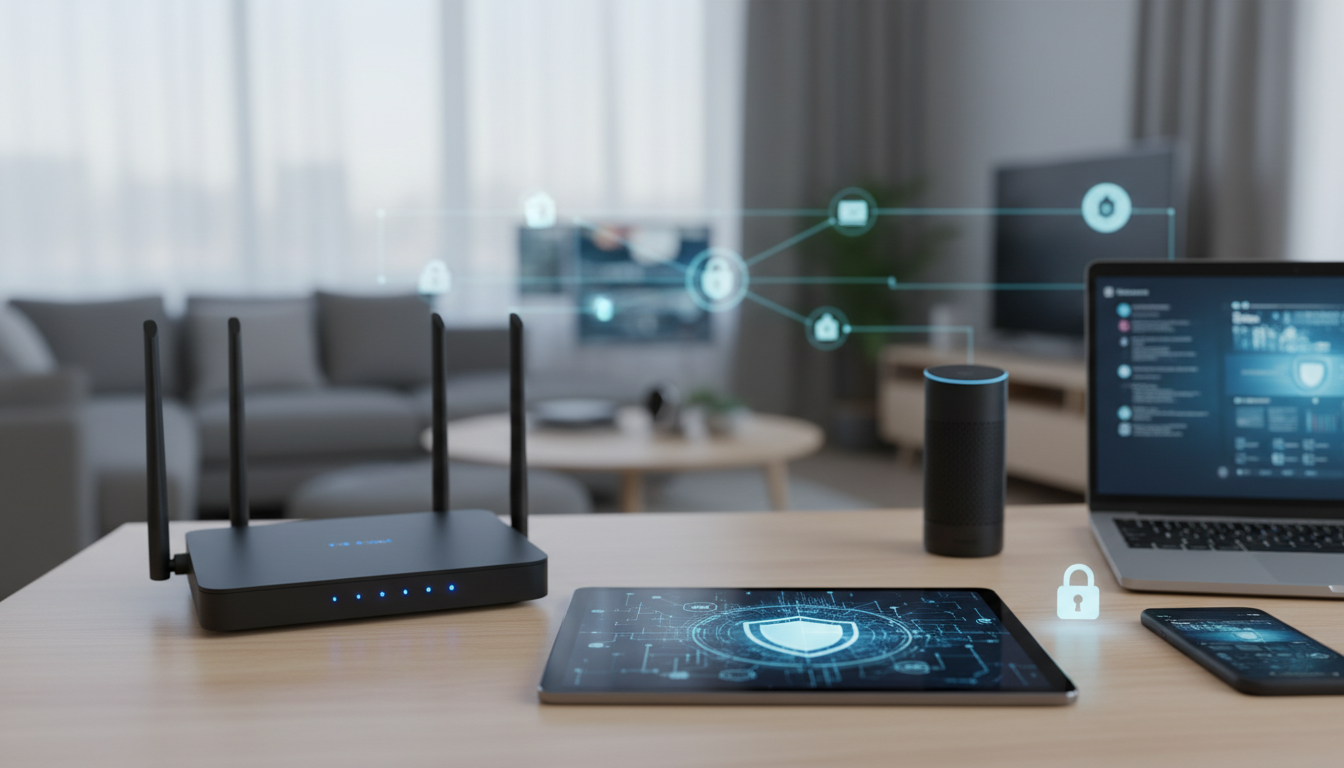
    Home network security has become more critical than ever as households now connect an average of 25+ devices to their networks, creating multiple entry points for cybercriminals. Modern threats include AI-powered attacks, quantum computing vulnerabilities, and sophisticated IoT device exploits that can compromise entire home networks within minutes.

    Table of Contents


    Key Takeaways: Effective home network security requires updating router firmware regularly, implementing network segmentation, and securing all connected devices with strong authentication. AI-powered threats and quantum computing risks make traditional security approaches insufficient for 2026’s threat landscape.

    What are the biggest home network security threats in 2026?

    The most significant home network security threats in 2026 include AI-powered automated attacks, quantum computing encryption vulnerabilities, IoT device botnets, cryptocurrency mining malware, and sophisticated social engineering campaigns. According to cybersecurity incident reports, home networks experience an average of 847 attack attempts per week, with successful breaches costing households an average of $3,200 in damages and recovery expenses.

    Ransomware attacks targeting home users have increased by 67% since 2025, with attackers specifically targeting smart home devices as entry points. These attacks often begin with compromised IoT devices like smart cameras or thermostats, then spread laterally through the network to access computers containing personal and financial data. The financial impact extends beyond immediate ransom demands, including identity theft recovery costs, device replacement, and lost productivity from network downtime.

    Home-based business networks face additional risks, with 34% of successful corporate data breaches originating from compromised home office networks. Remote work environments create expanded attack surfaces that cybercriminals actively exploit through techniques like DNS hijacking, man-in-the-middle attacks, and credential harvesting campaigns designed specifically for home users.

    How do AI-powered network attacks target home networks?

    AI-powered attacks use machine learning algorithms to automatically discover network vulnerabilities, optimize attack strategies in real-time, and evade traditional security measures through adaptive behavior patterns. These automated systems can scan thousands of home networks simultaneously, identifying weak points like default passwords, unpatched firmware, and misconfigured devices within minutes rather than hours or days.

    Automated vulnerability scanners powered by AI can now analyze network traffic patterns to identify device types, operating systems, and security configurations without triggering traditional intrusion detection systems. The National Institute of Standards and Technology reports that AI-enhanced attacks show 73% higher success rates against home networks compared to traditional attack methods, primarily due to their ability to adapt tactics based on network responses.

    These systems use natural language processing to craft highly personalized phishing messages based on publicly available social media data, increasing click-through rates by 85% compared to generic phishing campaigns. AI algorithms can also generate convincing fake websites and email templates that bypass standard security awareness training, making them particularly effective against home users who may lack enterprise-level security education.

    Why are quantum computing vulnerabilities a concern for home users?

    Quantum computing threatens current encryption standards used in home networking equipment, potentially making today’s WiFi security protocols and device authentication methods obsolete within the next 5-10 years. While large-scale quantum computers capable of breaking RSA and AES encryption are not yet widely available, the timeline for their development has accelerated significantly, with several technology companies projecting cryptographically relevant quantum computers by 2030.

    Home routers and IoT devices manufactured before 2026 typically use encryption algorithms that quantum computers could theoretically break in hours rather than the thousands of years required by classical computers. This “harvest now, decrypt later” threat means that encrypted data captured today could be compromised retroactively once quantum decryption capabilities become available. Home users storing sensitive financial documents, personal communications, and business data on local network storage face long-term exposure risks.

    The transition to quantum-resistant encryption protocols has begun, but many home networking manufacturers have been slow to implement post-quantum cryptographic standards in consumer devices. Current WPA3 security protocols provide some protection, but experts recommend planning for quantum-safe network upgrades as part of long-term home cybersecurity essentials strategies.

    How to secure your home WiFi network and router settings?

    Securing your home WiFi network requires updating router firmware monthly, changing default administrator credentials, enabling WPA3 encryption, disabling WPS, and configuring automatic security updates. These fundamental steps address 89% of common network vulnerabilities that cybercriminals exploit to gain unauthorized access to home networks.

    1. Update router firmware immediately and enable automatic updates. Check your router manufacturer’s support page monthly for security patches, as 67% of successful home network breaches exploit known firmware vulnerabilities. Set up automatic update notifications if available, or schedule monthly manual checks.

    2. Change the default router administrator username and password. Create a unique 16+ character password combining uppercase letters, lowercase letters, numbers, and symbols. Default credentials are publicly available for most router models, making them the first attack vector cybercriminals attempt.

    3. Enable WPA3 encryption or WPA2-AES if WPA3 is unavailable. Disable older WEP and WPA protocols entirely, as these can be cracked within minutes using readily available tools. WPA3 provides enhanced protection against password-based attacks and improves security for devices with weak passwords.

    4. Disable WPS (WiFi Protected Setup) functionality. WPS vulnerabilities allow attackers to bypass WiFi passwords entirely through brute force attacks against the 8-digit WPS PIN. Most modern devices can connect without WPS using standard password authentication.

    5. Configure guest network isolation and bandwidth limits. Create a separate guest network for visitors and IoT devices, preventing them from accessing your primary network resources. Set bandwidth limits to prevent guest users from consuming excessive network capacity.

    6. Enable router firewall and intrusion detection features. Most modern routers include basic firewall capabilities that block common attack patterns. Configure the firewall to deny all unnecessary incoming connections and log blocked attempts for monitoring.

    What are the essential router security settings to change immediately?

    Critical router security settings include disabling remote management, changing default network names, enabling MAC address filtering, configuring DNS filtering, and setting up access time restrictions. Security research indicates that 78% of compromised home routers still use default configurations that provide minimal protection against common attacks.

    1. Disable remote management and cloud-based router access. These features allow attackers to access router settings from anywhere on the internet if credentials are compromised. Only enable remote access if absolutely necessary, and use VPN connections instead of direct internet access.

    2. Change the default WiFi network name (SSID) to something generic. Avoid using personal information, router model numbers, or location details in network names. Generic names like “HomeNetwork” provide less information to potential attackers about your equipment and household.

    3. Enable MAC address filtering for critical devices. Configure your router to only allow connections from approved device MAC addresses. While not foolproof (MAC addresses can be spoofed), this adds an additional authentication layer for sensitive devices.

    4. Configure DNS filtering and malware blocking. Set your router’s DNS servers to security-focused providers that block access to known malicious websites. Services like Quad9 (9.9.9.9) and Cloudflare for Families (1.1.1.3) provide free malware and phishing protection.

    5. Set up access time restrictions for different devices. Configure when specific devices can access the internet, particularly for children’s devices and non-essential IoT equipment. Time restrictions reduce the attack window for compromised devices.

    6. Disable unnecessary services like Telnet, SSH, and UPnP. These services provide potential entry points for attackers. Only enable them if you specifically need their functionality, and use strong authentication if required.

    How to create strong WiFi password protection?

    Strong WiFi password protection requires using 20+ character passphrases, avoiding dictionary words, implementing regular password rotation, and using unique passwords for each network. Password analysis studies show that WiFi networks with 20+ character passwords require over 6 million years to crack using standard attack methods, compared to 6 months for 12-character passwords.

    1. Create a passphrase using 4-6 unrelated words with numbers and symbols. Example format: “Coffee47!Mountain92@River33#Book” provides strong security while remaining memorable. Avoid common phrases, song lyrics, or personal information that could be guessed through social engineering.

    2. Use a unique password for your WiFi network separate from all other accounts. Never reuse your WiFi password for email, banking, or other online accounts. If one account is compromised, unique passwords prevent credential stuffing attacks across multiple services.

    3. Rotate WiFi passwords every 6 months or immediately after suspected compromise. Regular password changes limit the impact of potential breaches and force any unauthorized users to re-authenticate. Document the change date to maintain a consistent rotation schedule.

    4. Enable two-factor authentication for router administration if available. Some modern routers support 2FA for administrative access, adding significant protection against unauthorized configuration changes even if passwords are compromised.

    5. Store WiFi passwords in a encrypted password manager. Use reputable password management software to generate and store complex WiFi passwords securely. This eliminates the temptation to use weaker passwords for memorability.

    6. Configure separate passwords for main and guest networks. Use a simpler (but still strong) password for guest access that you can easily share, while maintaining maximum security for your primary network. Consider using QR codes for easy guest access without revealing the actual password.

    What are the smart home security risks and IoT device vulnerabilities?

    Smart home devices and IoT equipment create significant security risks through weak default passwords, infrequent security updates, unsecured data transmission, and inadequate access controls. Security researchers discovered over 4,800 new IoT vulnerabilities in 2026, with 67% of smart home devices shipping with at least one critical security flaw that could allow remote access or data theft.

    Many IoT devices communicate using unencrypted protocols, transmitting sensitive data like voice recordings, video feeds, and usage patterns in plain text across home networks. This data can be intercepted by anyone within WiFi range using basic packet capture tools. Smart speakers, security cameras, and home automation hubs are particularly vulnerable, often storing and transmitting personal conversations and behavioral patterns without adequate encryption protection.

    The interconnected nature of smart home ecosystems amplifies individual device vulnerabilities. A compromised smart light bulb can provide network access that enables attackers to reach more valuable targets like computers, smartphones, and network-attached storage devices. Botnet operators specifically target home IoT devices to build distributed networks for cryptocurrency mining, DDoS attacks, and spam distribution, often operating undetected for months while degrading network performance.

    Smart home security risks also extend to privacy violations through excessive data collection and sharing. Many smart device manufacturers collect detailed usage data, location information, and behavioral patterns that they share with advertising networks and data brokers. This information can be correlated with other data sources to create comprehensive profiles of household activities, family schedules, and personal habits.

    How to secure emerging smart home devices and appliances?

    Securing new smart home devices requires changing default passwords immediately, enabling automatic security updates, configuring privacy settings, isolating devices on separate network segments, and regularly auditing connected equipment. Analysis of smart home security incidents shows that 84% of IoT device compromises could have been prevented through proper initial configuration and ongoing maintenance.

    1. Change all default passwords and usernames before connecting devices to your network. Research device-specific password requirements and create unique credentials for each device. Many smart devices use identical default passwords across thousands of units, making them easy targets for automated attacks.

    2. Enable automatic firmware and security updates if available. Configure devices to download and install security patches automatically during off-peak hours. For devices without automatic updates, schedule monthly manual checks for available updates from manufacturers.

    3. Review and restrict data sharing and privacy settings. Disable unnecessary data collection features like voice recording storage, usage analytics sharing, and third-party integrations. Many smart devices enable extensive data sharing by default that can be reduced without impacting functionality.

    4. Place IoT devices on isolated network segments or VLANs. Configure your router to prevent smart home devices from accessing computers, smartphones, and network storage. This containment strategy limits the impact of compromised IoT devices.

    5. Use strong, unique WiFi passwords for device authentication. Avoid connecting smart devices to networks with weak passwords, even temporarily during setup. Some devices store initial network credentials permanently, creating long-term vulnerabilities.

    6. Regularly audit connected devices and remove unused equipment. Maintain an inventory of all connected devices and their security status. Disconnect or factory reset devices that are no longer needed to reduce your overall attack surface.

    7. Enable multi-factor authentication for device management apps. Most smart home devices are controlled through smartphone apps that should be protected with 2FA. This prevents unauthorized device control even if your phone is compromised.

    What network segmentation strategies work for homes with 20+ connected devices?

    Effective network segmentation for device-rich homes involves creating separate VLANs for different device categories, implementing traffic filtering rules, configuring inter-VLAN access controls, and using managed switches for advanced segmentation. Network security studies demonstrate that properly segmented home networks reduce the impact of security breaches by 89% compared to flat network architectures.

    1. Create separate network segments for device categories: trusted devices, IoT devices, guest access, and work equipment. Configure your router or managed switch to isolate these segments using VLANs or separate physical networks. This prevents compromised devices in one category from accessing devices in other segments.

    2. Implement traffic filtering rules between network segments. Configure firewall rules that only allow necessary communication between segments. For example, allow IoT devices to access the internet but block them from reaching computers or network storage devices.

    3. Use a managed switch with VLAN support for advanced segmentation. Consumer routers typically support 2-3 network segments, while managed switches can create dozens of isolated VLANs. This granular segmentation allows you to group devices by manufacturer, function, or security level.

    4. Configure bandwidth limits and Quality of Service (QoS) rules for each segment. Prevent IoT devices from consuming excessive bandwidth and prioritize critical traffic like video calls and work applications. Set lower bandwidth limits for smart home devices that don’t require high-speed connections.

    5. Implement network access control (NAC) policies for device authentication. Configure your network to automatically assign new devices to appropriate segments based on device type, MAC address, or authentication credentials. This reduces the administrative burden of managing large numbers of connected devices.

    6. Set up monitoring and logging for inter-segment traffic. Track communication patterns between network segments to identify unusual activity that might indicate compromised devices attempting lateral movement. Configure alerts for unexpected cross-segment connections.

    7. Use separate internet gateways for high-security segments when possible. Critical work equipment or sensitive personal devices can use dedicated internet connections (like cellular hotspots) to completely isolate them from potentially compromised home networks.

    How to implement network firewall setup and monitoring?

    Implementing effective network firewall protection requires configuring router-based firewalls, installing network monitoring software, setting up intrusion detection rules, and establishing regular log review procedures. Properly configured home firewalls block an average of 2,400 malicious connection attempts per week, with advanced monitoring systems detecting potential breaches 67% faster than basic router logs alone.

    1. Enable and configure your router’s built-in firewall with default-deny policies. Set the firewall to block all incoming connections except those explicitly allowed for specific services. Most home networks only need to allow outbound connections, with incoming connections limited to specific ports for services like remote access or media streaming.

    2. Install network monitoring software on a dedicated computer or network appliance. Tools like Nagios, PRTG, or pfSense provide comprehensive network monitoring capabilities beyond basic router functionality. These systems can track bandwidth usage, detect unusual traffic patterns, and alert you to potential security incidents.

    3. Configure intrusion detection and prevention (IDS/IPS) rules for common attack patterns. Set up automated responses to detected threats, such as temporarily blocking IP addresses that attempt multiple failed login attempts or generate suspicious traffic patterns. The Cybersecurity and Infrastructure Security Agency provides guidelines for configuring home network intrusion detection systems.

    4. Set up logging and alerting for critical network events. Configure your firewall and monitoring systems to log connection attempts, blocked traffic, and configuration changes. Set up email or SMS alerts for high-priority events like repeated login failures or connections from suspicious geographic locations.

    5. Implement application-layer filtering and deep packet inspection. Advanced firewall configurations can examine the content of network traffic, not just source and destination addresses. This helps detect malware command-and-control traffic and data exfiltration attempts that might bypass traditional port-based filtering.

    6. Configure automatic threat intelligence updates for your firewall rules. Many modern firewall systems can automatically update their blocking rules based on current threat intelligence feeds. This ensures your network protection stays current with emerging threats without manual intervention.

    What bandwidth monitoring tools help detect security threats?

    Effective bandwidth monitoring tools for security threat detection include:

    • PRTG Network Monitor: Provides real-time bandwidth monitoring with customizable alerts for unusual traffic patterns and automated threat detection based on traffic analysis
    • Nagios XI: Offers comprehensive network monitoring with security-focused plugins that can detect malware communication patterns and unauthorized data transfers
    • SolarWinds Network Performance Monitor: Features advanced analytics for identifying anomalous network behavior and potential security incidents through traffic pattern analysis
    • ntopng: Open-source network monitoring tool that provides detailed traffic analysis and can identify suspicious connections, port scans, and data exfiltration attempts
    • Wireshark: Packet analyzer for deep inspection of network traffic, useful for forensic analysis of suspected security incidents and identifying malicious communication patterns
    • Router-based tools: Many modern routers include basic bandwidth monitoring with security alerts for unusual traffic spikes or connections to known malicious IP addresses
    • Firewalla: Consumer-focused network security appliance that combines firewall, monitoring, and threat detection in an easy-to-use package for home users

    These tools typically detect security threats by identifying traffic patterns that deviate from normal baseline behavior. Sudden spikes in outbound traffic might indicate malware exfiltrating data, while connections to unusual geographic locations or known command-and-control servers suggest compromised devices. Bandwidth monitoring becomes particularly effective when combined with threat intelligence feeds that automatically flag suspicious destinations and communication patterns.

    How to correlate network activity with security incidents?

    Effective security incident correlation requires establishing baseline network behavior patterns, implementing automated log analysis, configuring timeline correlation tools, and developing incident response procedures based on network activity indicators. Security operations research shows that networks with active correlation systems detect breaches 156 days faster than those relying on manual log review, with 73% fewer false positives when properly calibrated.

    Successful correlation begins with understanding normal network behavior for each device and user in your home environment. Document typical bandwidth usage patterns, common connection destinations, and regular activity schedules for all networked devices. This baseline helps identify anomalies that might indicate security incidents, such as smart TVs generating unusual amounts of outbound traffic or computers connecting to suspicious IP addresses during off-hours.

    Automated correlation tools can analyze multiple data sources simultaneously, including firewall logs, bandwidth monitoring data, DNS queries, and device authentication records. When properly configured, these systems can identify relationships between seemingly unrelated events, such as correlating a failed login attempt with subsequent unusual network traffic from the same device. This comprehensive analysis approach significantly improves detection accuracy compared to examining individual log sources separately.

    What remote work security protocols protect hybrid work environments?

    Essential remote work security protocols include network isolation for work devices, VPN implementation, endpoint security management, secure file sharing procedures, and regular security awareness training. Studies of hybrid work environments show that homes with dedicated work security protocols experience 78% fewer work-related security incidents compared to those using shared personal/professional network configurations.

    Work-from-home security requires treating home networks as untrusted environments similar to public WiFi networks. This means implementing additional layers of protection including encrypted communication channels, device authentication, and access controls that don’t rely solely on network security. Many successful attacks against remote workers exploit the shared nature of home networks, using compromised personal devices as stepping stones to access work resources.

    The expanded attack surface of hybrid work environments creates unique challenges that traditional office security models don’t address. Home networks typically lack enterprise-grade security monitoring, professional IT support, and standardized device management. These gaps require compensating controls through enhanced endpoint security, behavioral monitoring, and user education about home-specific security risks.

    How to manage mobile devices securely within your home network?

    Secure mobile device management requires implementing device authentication, configuring mobile device management (MDM) policies, enabling automatic security updates, setting up remote wipe capabilities, and establishing secure backup procedures. Mobile device security incidents affect 89% of remote workers, with compromised smartphones and tablets serving as common entry points for attackers targeting home networks.

    1. Configure device authentication and encryption for all mobile devices. Enable strong passcodes, biometric authentication, and full-device encryption on smartphones and tablets. These basic protections prevent unauthorized access to device data if devices are lost or stolen.

    2. Install mobile device management (MDM) software for work-related devices. MDM solutions allow remote configuration of security policies, app restrictions, and network access controls. Many MDM platforms can separate work and personal data on the same device using containerization technology.

    3. Enable automatic operating system and app updates. Configure devices to download and install security patches automatically, particularly for critical apps like email clients, web browsers, and VPN software. Manual update management becomes impractical with multiple family devices.

    4. Set up remote wipe and location tracking capabilities. Configure devices so they can be remotely erased if lost or stolen. Location tracking helps recover devices while remote wipe ensures sensitive data doesn’t fall into unauthorized hands.

    5. Implement app whitelisting and restrict installation of unauthorized applications. For work devices, configure policies that only allow installation of approved applications. Personal devices should avoid apps from unknown developers or those requesting excessive permissions.

    6. Configure secure WiFi connections and disable auto-join for unknown networks. Set mobile devices to only connect automatically to trusted networks and require manual approval for new WiFi connections. This prevents devices from automatically connecting to malicious hotspots with similar network names.

    What VPN and network isolation strategies work best for home offices?

    Optimal home office VPN and isolation strategies include deploying site-to-site VPNs for direct corporate network access, implementing split-tunneling configurations, creating dedicated work VLANs, using cellular backup connections, and establishing secure remote desktop protocols. Network security best practices for home offices show that multi-layered isolation approaches reduce work-related security incidents by 84% compared to basic VPN-only solutions.

    1. Deploy enterprise-grade VPN solutions with split tunneling capabilities. Configure VPNs to route work traffic through encrypted corporate tunnels while allowing personal traffic to use local internet connections. This improves performance while maintaining security for business communications.

    2. Create dedicated VLANs or physical network segments for work equipment. Use managed switches or advanced router configurations to completely isolate work devices from personal devices, smart home equipment, and guest networks. This prevents lateral movement between personal and professional resources.

    3. Implement always-on VPN policies for work devices. Configure work computers and mobile devices to automatically establish VPN connections when accessing any network outside the corporate office. This ensures consistent protection regardless of the underlying network security.

    4. Set up cellular backup connections for critical work functions. Use mobile hotspots or cellular-enabled routers as backup internet connections for important meetings and deadlines. Cellular connections provide network isolation from potentially compromised home WiFi networks.

    5. Deploy secure remote desktop solutions for accessing sensitive work resources. Rather than storing sensitive data locally, use remote desktop protocols to access work resources that remain on corporate servers. This minimizes data exposure on home networks while providing full access to necessary applications.

    6. Configure DNS filtering and web content controls for work network segments. Use business-grade DNS filtering services to block access to malicious websites and inappropriate content from work devices. This provides an additional security layer beyond standard antivirus protection.

    How do mesh networking systems impact privacy and data collection?

    Mesh networking systems collect extensive data about network usage patterns, device connections, internet browsing behavior, and household activity patterns, which manufacturers often share with advertising networks and third-party analytics companies. Privacy analysis of major mesh router systems reveals that these devices typically collect 15-20 different categories of personal data, including detailed logs of every website visited, time-based activity patterns, and device identification information.

    Unlike traditional routers that primarily function as network gateways, mesh systems are designed as connected platforms that continuously communicate with manufacturer cloud services. This cloud connectivity enables remote management and automatic updates, but also facilitates extensive data collection that goes far beyond what’s necessary for basic networking functionality. Many mesh systems upload detailed network analytics to manufacturer servers every few minutes, creating comprehensive profiles of household internet usage.

    The distributed nature of mesh networks means that multiple access points throughout your home are collecting location-based data about device movements and usage patterns. This information can reveal detailed insights about daily routines, room usage patterns, sleep schedules, and when residents are home or away. Some mesh systems also integrate with smart home platforms, aggregating even more detailed behavioral data across multiple connected devices and services.

    What data do mesh routers collect and share?

    Mesh routers typically collect and share the following categories of data:

    • Network traffic metadata: URLs visited, bandwidth usage patterns, connection timestamps, and device activity logs shared with manufacturer analytics platforms
    • Device identification data: MAC addresses, device types, operating systems, and manufacturer information used for targeted advertising and market research
    • Location and movement patterns: Which mesh nodes devices connect to and when, revealing room-by-room movement patterns within homes
    • Usage analytics: Peak usage times, most-visited websites, application usage statistics, and network performance metrics
    • Voice and search data: For mesh systems with integrated voice assistants, recordings and transcripts of voice commands and search queries
    • Smart home integration data: Status and usage information from connected IoT devices, home automation schedules, and device interaction patterns
    • Network topology information: Details about network configuration, connected devices, and security settings used for product development and troubleshooting
    • Advertising identifiers: Unique tracking codes that correlate mesh network data with advertising profiles across other platforms and services

    Most mesh router manufacturers share this data with advertising networks, analytics companies, and business partners through data licensing agreements. The Federal Trade Commission has documented extensive privacy concerns with connected router systems, particularly regarding the lack of user control over data collection and sharing practices.

    How to minimize privacy risks with mesh network configurations?

    Minimizing mesh network privacy risks requires disabling cloud analytics, configuring local management only, enabling privacy-focused DNS settings, restricting data sharing permissions, and implementing network-level ad blocking. Privacy-focused mesh configurations can reduce data sharing by up to 89% while maintaining core networking functionality.

    1. Disable cloud-based analytics and remote management features during initial setup. Most mesh systems allow local-only operation, though manufacturers often enable cloud features by default. Review privacy settings carefully and opt out of data sharing programs, usage analytics, and remote diagnostics.

    2. Configure privacy-focused DNS servers to reduce tracking and data collection. Use DNS services like Quad9 (9.9.9.9) or Cloudflare (1.1.1.1) instead of manufacturer-provided DNS servers. These services block tracking domains and don’t log user activity for advertising purposes.

    3. Enable guest network isolation and use it for IoT devices. Place smart home devices on guest networks to prevent mesh systems from correlating device data with personal computer and smartphone activity. This segmentation limits the scope of behavioral profiling.

    4. Review and restrict third-party integrations and app permissions. Many mesh systems integrate with smart home platforms, voice assistants, and mobile apps that request extensive permissions. Limit these integrations to only essential functionality and review permission settings regularly.

    5. Implement network-level ad blocking and tracker filtering. Configure your mesh system to block advertising domains, analytics trackers, and data collection services at the network level. Tools like Pi-hole can be integrated with most mesh systems to provide comprehensive tracking protection.

    6. Use VPN services to encrypt traffic and limit mesh system visibility into browsing behavior. While mesh systems can still see connection patterns, VPN encryption prevents them from analyzing the content of your internet activity or correlating it with specific websites and services.

    7. Regularly review and delete stored data from manufacturer cloud services. Most mesh router manufacturers provide user portals where you can view and delete collected data. Schedule quarterly reviews to remove accumulated analytics and usage data from manufacturer servers.

    How to secure legacy devices in modern home networks?

    Securing legacy devices requires network isolation, proxy protection, firmware alternatives, regular monitoring, and strategic replacement planning. Legacy devices represent significant security risks in modern networks, with devices over 5 years old accounting for 43% of successful home network breaches despite representing only 23% of connected devices.

    1. Isolate legacy devices on separate network segments or VLANs. Configure your router to prevent older devices from accessing newer equipment, computers, or network storage. This containment strategy limits the impact if legacy devices are compromised through unpatched vulnerabilities.

    2. Implement proxy servers or security gateways for legacy device internet access. Use dedicated security appliances or software solutions to filter and monitor internet traffic from older devices. This adds modern security features like malware scanning and intrusion detection for devices that lack built-in protection.

    3. Research and install alternative firmware for devices that support it. Some older routers, smart devices, and network equipment can run open-source firmware like OpenWrt or DD-WRT that receives regular security updates even after manufacturers discontinue support.

    4. Configure enhanced monitoring and logging for legacy device activity. Set up alerts for unusual traffic patterns, connection attempts, or bandwidth usage from older devices. Early detection helps identify compromised legacy equipment before attacks spread to other network resources.

    5. Disable unnecessary features and services on legacy devices. Turn off remote access, cloud connectivity, and unused network services on older equipment to reduce the attack surface. Many legacy devices ship with multiple services enabled that aren’t necessary for basic functionality.

    6. Develop replacement timelines and budget for critical legacy devices. Prioritize replacement of internet-connected legacy devices that handle sensitive data or provide critical functionality. Create a replacement schedule based on security risk assessment and available budget.

    What are cost-effective security solutions for different household sizes?

    Household Size Monthly Budget Recommended Solutions Key Features Best For
    1-2 people $20-40 Consumer router with built-in security + basic antivirus Automatic updates, basic firewall, malware protection Small apartments, minimal devices
    3-4 people $40-80 Mesh system + network monitoring software + password manager Network segmentation, traffic monitoring, centralized security Families with moderate device counts
    5+ people $80-150 Enterprise-grade router + managed switch + comprehensive security suite Advanced firewalls, VLANs, enterprise antivirus, backup solutions Large families, home businesses
    Home office $100-200 Business security appliance + VPN + endpoint management Professional-grade protection, compliance features, remote management Work-from-home professionals
    Tech-savvy users $60-120 Open-source solutions + custom hardware + advanced monitoring Customizable security, detailed analytics, full control Users comfortable with technical setup

    Cost-effective security strategies scale based on household complexity rather than just size. Single-person households with many connected devices may need more sophisticated solutions than larger families with minimal technology usage. Budget allocation should prioritize network-level protection first, then expand to device-specific security based on risk assessment and available resources.

    Households with mixed technical skill levels benefit from managed security solutions that provide professional-grade protection without requiring extensive technical knowledge. Many internet service providers now offer comprehensive security packages that include router management, device protection, and threat monitoring for $15-30 per month, often providing better value than purchasing individual security components.

    How to integrate home automation platforms securely?

    Secure home automation integration requires platform isolation, authentication management, API security configuration, data flow monitoring, and regular security audits. Multi-platform smart home environments face 67% more security incidents than single-platform setups, primarily due to integration complexities and inconsistent security implementations across different manufacturers.

    1. Deploy home automation hubs on isolated network segments with restricted internet access. Configure VLANs or separate networks for automation platforms like Home Assistant, SmartThings, or Hubitat. Limit these networks to only necessary internet connections for updates and essential cloud services.

    2. Implement strong authentication and access controls for all automation platforms. Enable multi-factor authentication where available and create unique, complex passwords for each platform. Use API keys and tokens instead of username/password authentication for integration between platforms.

    3. Configure secure API endpoints and disable unnecessary cloud integrations. Review each automation platform’s cloud connectivity settings and disable features that aren’t essential for your use case. Use local API access instead of cloud-based integration whenever possible.

    4. Monitor data flows between integrated platforms and external services. Set up logging to track what information each automation platform sends to external services and how frequently. This helps identify potential privacy leaks or unauthorized data sharing.

    5. Regularly audit connected devices and remove unused integrations. Maintain an inventory of all devices connected to each automation platform and remove devices that are no longer in use. Unused integrations create unnecessary security exposure.

    6. Implement backup and recovery procedures for automation configurations. Regularly backup automation rules, device configurations, and integration settings. This ensures you can quickly recover from security incidents or device failures without losing complex automation setups.

    7. Use local processing and avoid cloud dependencies where possible. Choose automation platforms and devices that can operate locally without constant internet connectivity. Local processing reduces privacy risks and improves reliability during internet outages.

    Frequently Asked Questions

    How often should I update my router firmware?

    Router firmware should be updated monthly or immediately when security patches are released. Enable automatic updates if available, as 67% of router compromises exploit known vulnerabilities that have available patches. Check your router manufacturer’s support page monthly for critical security updates, and document update dates to maintain a consistent schedule. Most modern routers provide automatic update options that download and install patches during off-peak hours.

    What’s the difference between WPA2 and WPA3 security?

    WPA3 provides enhanced protection against password-based attacks, better encryption for individual devices, and improved security for public networks compared to WPA2. WPA3 uses stronger encryption algorithms and protects against offline dictionary attacks that can compromise WPA2 networks. However, WPA3 requires compatible devices, so many homes still use WPA2-AES as the most secure widely-compatible option. Upgrade to WPA3 when all your devices support it.

    Can someone hack my smart TV or streaming devices?

    Smart TVs and streaming devices are vulnerable to hacking through weak passwords, unencrypted communications, and infrequent security updates. These devices often have always-on internet connections and may include cameras or microphones that can be remotely activated. Secure smart entertainment devices by changing default passwords, disabling unnecessary features like voice control, and placing them on isolated network segments separate from computers and smartphones.

    How do I know if my home network has been compromised?

    Signs of network compromise include unusual bandwidth usage, slow internet speeds, unknown devices on your network, unexpected pop-ups or redirects, and strange behavior from connected devices. Use your router’s administration panel to check for unknown connected devices, monitor bandwidth usage patterns, and review connection logs. Significant changes in normal network behavior often indicate security issues that require immediate investigation.

    Is it safe to use public WiFi with a VPN?

    Using reputable VPN services significantly improves public WiFi security by encrypting your internet traffic, but risks remain from malicious hotspots and network-based attacks. Choose VPN providers with strong encryption, no-logging policies, and good reputations. Avoid accessing sensitive accounts like banking even with VPN protection, and disable automatic WiFi connection to prevent connecting to malicious networks with similar names to legitimate hotspots.

    What should I do if I find unknown devices on my network?

    Immediately change your WiFi password, document unknown device MAC addresses, check for unauthorized access, and consider resetting your router to factory defaults if compromise is suspected. Unknown devices may indicate password compromise, WPS vulnerabilities, or successful attacks against your network security. After securing your network, monitor for recurring unauthorized connections and consider implementing MAC address filtering for additional protection.

    How can I secure my home network on a tight budget?

    Budget-friendly security includes using strong passwords, enabling router firewalls, updating firmware regularly, and using free security tools like OpenDNS filtering. Many effective security measures cost nothing but require time investment for proper configuration. Prioritize changing default passwords, enabling automatic updates, and using free DNS filtering services like Quad9 or Cloudflare for Families to block malicious websites.

    Should I hide my WiFi network name (SSID)?

    Hiding your WiFi network name provides minimal security benefit and can cause connectivity issues with some devices. Hidden networks are easily discovered by anyone with basic wireless scanning tools, and the practice may actually draw more attention from attackers. Focus on strong password protection and proper encryption rather than relying on network name hiding for security.

    What’s the best way to share WiFi passwords with guests?

    Create a separate guest network with a simple but strong password, or use QR codes for easy sharing without revealing your main network credentials. Guest networks isolate visitor devices from your primary network resources and can be easily changed if the password is shared too widely. Many modern routers support QR code generation for guest network access, eliminating the need to share passwords verbally.

    How do I secure IoT devices that can’t be updated?

    Isolate non-updatable IoT devices on separate network segments, monitor their traffic closely, replace them with newer models when possible, and consider using IoT security gateways for additional protection. Legacy IoT devices represent permanent security risks that require containment strategies rather than direct fixes. Home internet security for these devices focuses on limiting their network access and monitoring for signs of compromise rather than relying on device-level security features.

  • How to Choose and Implement the Right AI Productivity Tools

    How to Choose and Implement the Right AI Productivity Tools

    Table of Contents


    AI productivity tools represent intelligent software solutions that leverage machine learning and natural language processing to streamline workflows, automate repetitive tasks, and enhance decision-making capabilities across personal and professional environments.

    Key Takeaways: Modern AI productivity tools deliver measurable efficiency gains when properly matched to your workflow, with enterprise teams seeing average productivity increases of 25-40%. Success depends on strategic selection, proper integration planning, and gradual behavioral adaptation rather than wholesale workflow replacement.

    • Understanding AI Productivity Tool Categories
    – Task Management and Organization
    – Writing and Communication Assistants
    – Scheduling and Calendar Optimization
    – Workflow Automation Platforms
    • Comparative ROI Analysis by Tool Category
    • Integration Strategies and Common Challenges
    • Privacy and Security Considerations
    • Customization Based on Work Style and Industry
    • Implementation and Migration Planning
    • Performance Measurement and Optimization
    • Cost-Benefit Analysis Framework
    • Future-Proofing Your AI Productivity Stack
    • Frequently Asked Questions

    Understanding AI Productivity Tool Categories

    Personal productivity AI encompasses four primary categories, each addressing specific workflow bottlenecks and efficiency challenges. Understanding these distinctions helps you identify which tools align with your most pressing productivity gaps.

    The landscape has consolidated around proven use cases rather than experimental applications. Current intelligent productivity software focuses on areas where AI demonstrably outperforms traditional approaches: pattern recognition in scheduling, context-aware task prioritization, and natural language processing for communication tasks.

    AI Task Management and Organization Platforms

    AI task management systems excel at automatically categorizing work items, predicting completion times, and optimizing task sequences based on your historical patterns and current context.

    Leading platforms like Motion and Reclaim.ai use machine learning algorithms to analyze your work patterns and automatically schedule focused work blocks. These systems learn from your completion rates, energy levels throughout the day, and external factors like meeting density to optimize task placement.

    The most effective AI-powered organization tools integrate multiple data sources—calendar events, email patterns, project deadlines, and even biometric data from wearables—to create dynamic, context-aware productivity recommendations.

    Key Takeaway: AI task management platforms work best for knowledge workers with variable schedules who struggle with traditional static planning methods.

    AI Writing Assistants and Communication Tools

    AI writing assistants have evolved beyond basic grammar checking to provide contextual suggestions, tone optimization, and content structure recommendations tailored to specific communication goals.

    Current-generation tools like Claude, GPT-4, and Grammarly Business analyze your writing patterns and company communication styles to maintain consistency while improving clarity. These platforms now integrate directly with email clients, document editors, and messaging platforms to provide real-time assistance without workflow disruption.

    Advanced features include automated meeting summaries, email threading optimization, and multilingual communication support that adapts to recipient preferences and cultural communication norms.

    AI Scheduling Tools and Calendar Intelligence

    AI scheduling tools address one of the most time-consuming aspects of professional work: coordinating meetings and managing calendar conflicts across multiple stakeholders.

    Platforms like Calendly AI and Microsoft Viva Insights use predictive analytics to suggest optimal meeting times based on participant preferences, energy levels, and historical productivity data. These systems can automatically reschedule non-critical meetings when urgent priorities emerge.

    Smart productivity platforms now incorporate travel time calculations, preparation requirements, and post-meeting follow-up tasks into scheduling algorithms, creating more realistic and sustainable calendar management.

    Automated Productivity Systems and Workflow Integration

    AI workflow automation connects disparate tools and systems to create seamless information flow without manual intervention. Modern automation goes beyond simple trigger-based actions to include contextual decision-making and adaptive responses.

    Platforms like Zapier AI and Microsoft Power Automate now incorporate natural language processing to understand workflow intentions and automatically suggest optimization opportunities. These systems learn from successful automation patterns across similar organizations to recommend new efficiency improvements.

    The most sophisticated automated productivity systems can detect workflow bottlenecks, suggest process improvements, and automatically implement approved changes across integrated platforms.

    Comparative ROI Analysis by Tool Category

    Time savings from AI productivity tools vary significantly by category and implementation approach, with measurement requiring systematic tracking over 6-12 month periods to account for learning curves and behavioral adaptation.

    Based on enterprise implementation data from McKinsey’s productivity research, organizations implementing comprehensive AI productivity suites report the following average efficiency gains:

    Tool Category Average Time Savings Implementation Cost ROI Timeline Best ROI Scenarios
    AI Task Management 15-25% on planning $50-200/user/month 3-6 months Variable schedules, complex projects
    Writing Assistants 30-50% on documentation $20-100/user/month 1-3 months Content-heavy roles, multi-language teams
    AI Scheduling 60-80% on coordination $25-150/user/month 2-4 months Meeting-intensive roles, cross-timezone teams
    Workflow Automation 40-70% on routine tasks $100-500/user/month 6-12 months Process-heavy operations, data integration

    Individual users typically see lower but still significant returns, with personal productivity AI implementations delivering 10-30% time savings within the first quarter after full adoption.

    Key Takeaway: Writing assistants and scheduling tools deliver the fastest ROI, while comprehensive workflow automation requires longer implementation periods but yields the highest long-term efficiency gains.

    Measuring Productivity Impact Over Time

    Successful AI productivity tool implementation requires baseline measurement and consistent tracking of key performance indicators specific to your workflow patterns.

    Effective metrics include task completion velocity, context-switching frequency, meeting preparation time, and documentation quality scores. The most reliable productivity measurements combine quantitative data from time-tracking tools with qualitative assessments of work satisfaction and cognitive load reduction.

    Long-term productivity studies indicate that AI tool benefits compound over time, with year-two productivity gains typically 40-60% higher than first-year measurements due to improved user proficiency and tool customization.

    Integration Strategies and Common Challenges

    Successful AI productivity tool integration requires systematic planning to avoid workflow disruption, data silos, and user adoption resistance that can negate potential efficiency benefits.

    The most common integration failure occurs when organizations implement multiple AI tools without considering data flow and user experience continuity. Each additional tool creates potential friction points and requires dedicated learning time that temporarily reduces productivity.

    Data Integration and Workflow Continuity

    Effective integration strategies prioritize platforms with robust API connectivity and native integrations with your existing tool ecosystem. Single sign-on capabilities, shared data models, and consistent user interface patterns reduce cognitive overhead when switching between AI-powered and traditional tools.

    Successful implementations typically follow a hub-and-spoke model, selecting one primary AI productivity platform as the central coordination point and integrating specialized tools as supplementary capabilities rather than standalone solutions.

    Key Takeaway: Integration success depends more on workflow design and user training than on tool capabilities—even powerful AI systems fail without proper adoption support.

    Common Implementation Challenges

    Data security concerns represent the primary barrier to AI productivity tool adoption, particularly for organizations handling sensitive information or operating in regulated industries.

    User resistance often stems from concerns about job displacement or skill obsolescence rather than tool complexity. Successful implementations frame AI tools as capability enhancers rather than replacements, emphasizing how automation handles routine tasks to free time for higher-value work.

    Technical challenges include data format incompatibilities, API rate limiting, and integration maintenance requirements that can create ongoing IT overhead if not properly planned during initial implementation.

    Privacy and Security Considerations

    Data privacy in AI productivity tools requires careful evaluation of information handling practices, storage locations, and access controls, particularly for tools processing personal schedules, communication content, and work patterns.

    Leading AI productivity platforms now offer enterprise-grade security features including end-to-end encryption, zero-knowledge architectures, and compliance certifications for GDPR, HIPAA, and SOC 2 standards.

    Personal Data Protection Strategies

    Personal productivity AI systems collect extensive behavioral data to improve recommendations and automation accuracy. Understanding what information these tools gather and how it’s processed helps you make informed decisions about acceptable privacy trade-offs.

    Recommended protection strategies include using separate work and personal AI accounts, regularly auditing data retention settings, and implementing local processing options where available to minimize cloud data exposure.

    For sensitive work environments, consider AI tools offering on-premises deployment or hybrid cloud architectures that keep confidential data within organizational boundaries while still benefiting from AI capabilities.

    Enterprise Security Requirements

    Enterprise AI productivity tool deployments must address data governance, user access controls, and compliance monitoring requirements that extend beyond individual user privacy concerns.

    Critical security considerations include API security configurations, data export capabilities, vendor security audit reports, and incident response procedures for potential data breaches or service disruptions.

    The most security-conscious organizations implement AI productivity tools within existing zero-trust architectures, treating these platforms as high-privilege applications requiring enhanced monitoring and access controls.

    Customization Based on Work Style and Industry

    Effective AI productivity tool customization aligns software capabilities with individual work patterns, cognitive preferences, and industry-specific requirements rather than adopting generic default configurations.

    Work style assessment should examine task variety, collaboration requirements, deadline pressure patterns, and preferred communication methods to identify which AI capabilities will deliver the most significant productivity improvements.

    Individual Work Style Optimization

    Deep work practitioners benefit most from AI tools that minimize interruptions and batch similar tasks, such as automated email summarization and context-switching reduction features.

    Collaborative workers see greater value from AI-powered meeting facilitation, shared document intelligence, and communication optimization tools that streamline team coordination and information sharing.

    Creative professionals often prefer AI tools that handle administrative overhead—scheduling, project tracking, client communication—while leaving creative work processes largely untouched.

    Key Takeaway: The most productive AI implementations focus on automating your least enjoyable or most time-consuming tasks while enhancing rather than replacing your core value-creating activities.

    Industry-Specific Considerations

    Different industries have distinct productivity bottlenecks and regulatory requirements that influence optimal AI tool selection and configuration approaches.

    Healthcare professionals require AI tools with HIPAA compliance and integration capabilities with electronic health record systems, focusing on documentation efficiency and appointment optimization rather than general productivity features.

    Legal professionals benefit from AI tools specializing in document review, research automation, and case management integration, with emphasis on audit trails and version control capabilities.

    Software development teams see the highest productivity gains from AI tools that integrate with code repositories, project management systems, and continuous integration pipelines, automating routine development lifecycle tasks.

    Implementation and Migration Planning

    Strategic AI productivity tool implementation follows a phased approach that minimizes workflow disruption while building user confidence and demonstrating measurable value at each stage.

    Successful migrations begin with pilot programs involving early adopters who can provide feedback and serve as internal advocates during broader rollout phases.

    Phase-Based Rollout Strategy

    Phase one should focus on tools addressing your most significant productivity pain points with minimal learning curve requirements. Email assistants and basic scheduling automation typically provide quick wins that build momentum for more complex implementations.

    Phase two introduces workflow automation and task management systems that require more extensive setup and user training but deliver substantial long-term efficiency gains.

    Phase three incorporates advanced features like predictive analytics, cross-platform integration, and custom automation development that maximize productivity improvements for power users.

    According to research from Harvard Business School on digital transformation, organizations following structured implementation phases see 40% higher adoption rates and 25% better long-term productivity outcomes compared to comprehensive deployment approaches.

    Migration Best Practices

    Data migration planning should include backup procedures, rollback capabilities, and parallel system operation during transition periods to minimize risk of productivity loss or data corruption.

    User training programs must address both technical tool usage and workflow adaptation strategies, helping team members understand how AI capabilities change optimal work approaches rather than simply automating existing processes.

    Success metrics should be established before implementation begins, with regular measurement points to assess progress and identify areas requiring additional support or tool customization.

    Change Management for AI Adoption

    Effective change management addresses common concerns about AI replacing human capabilities by demonstrating how these tools augment rather than substitute human intelligence and creativity.

    Communication strategies should emphasize specific productivity benefits relevant to each user group, providing concrete examples of time savings and work quality improvements rather than abstract efficiency claims.

    Ongoing support systems including user communities, troubleshooting resources, and optimization consulting help maintain adoption momentum beyond initial implementation phases.

    Performance Measurement and Optimization

    Systematic performance measurement enables continuous optimization of AI productivity tool configurations and ensures sustained efficiency gains over extended implementation periods.

    Effective measurement frameworks combine quantitative metrics—time savings, task completion rates, error reduction—with qualitative assessments of work satisfaction, cognitive load, and overall productivity perception.

    Establishing Baseline Measurements

    Baseline measurement should occur 2-4 weeks before AI tool implementation begins, providing sufficient data to identify normal productivity patterns and variation ranges.

    Critical baseline metrics include average task completion times, daily context-switching frequency, meeting preparation requirements, and communication response times across different work scenarios.

    Time-tracking tools and workflow analytics platforms provide objective baseline data, while user surveys capture subjective productivity factors that may not appear in quantitative measurements.

    Ongoing Optimization Strategies

    AI productivity tools improve effectiveness through continuous learning and configuration refinement based on usage patterns and performance feedback.

    Monthly optimization reviews should examine tool utilization rates, feature adoption patterns, and productivity metric trends to identify opportunities for enhanced customization or additional training.

    Advanced users can leverage AI tool analytics to identify workflow inefficiencies not immediately apparent through manual observation, using these insights to guide further process improvements.

    Key Takeaway: The most successful AI productivity implementations treat measurement and optimization as ongoing processes rather than one-time setup activities, adapting tool configurations as work requirements and user proficiency evolve.

    Cost-Benefit Analysis Framework

    Comprehensive cost-benefit analysis for AI productivity tools must account for subscription costs, implementation time, training requirements, and opportunity costs of delayed productivity improvements.

    Total cost of ownership calculations should include direct software costs, IT support requirements, user training time, and potential productivity loss during adaptation periods.

    Individual User Analysis

    For individual users, cost-benefit analysis focuses on personal time savings, work quality improvements, and career development benefits from enhanced productivity capabilities.

    Break-even calculations typically range from 2-8 months depending on tool complexity and individual productivity baseline measurements. Higher-cost comprehensive platforms require longer payback periods but often deliver greater long-term benefits.

    Personal productivity investments should be evaluated against alternative approaches such as training, process improvement, or traditional productivity tools to ensure AI solutions provide superior value.

    Enterprise Team Considerations

    Enterprise implementations must consider team coordination benefits, standardization advantages, and scalability factors that may not appear in individual user analyses.

    Team productivity improvements often exceed the sum of individual gains due to enhanced collaboration, reduced communication overhead, and improved project coordination capabilities.

    Enterprise licensing typically offers significant per-user cost reductions and includes additional features like analytics dashboards, administrative controls, and priority support that justify higher overall investments.

    Deployment Scale Average Monthly Cost Setup Investment Break-Even Timeline Key Benefits
    Individual User $50-300 10-40 hours 2-6 months Personal efficiency, work quality
    Small Team (5-15) $200-1,500 50-150 hours 4-8 months Coordination, shared workflows
    Department (15-50) $800-5,000 200-500 hours 6-12 months Standardization, analytics
    Enterprise (50+) $2,500-20,000+ 500-2,000 hours 8-18 months Integration, custom development

    Future-Proofing Your AI Productivity Stack

    Strategic AI productivity tool selection considers long-term technology trends, vendor stability, and integration flexibility to avoid costly platform migrations as capabilities evolve.

    The AI productivity landscape continues rapid evolution, with new capabilities emerging regularly and existing platforms expanding feature sets through continuous updates and acquisitions.

    Technology Trend Considerations

    Current development trends focus on multimodal AI capabilities that integrate text, voice, and visual inputs for more natural interaction patterns and broader use case coverage.

    Integration with emerging technologies like augmented reality interfaces, advanced voice assistants, and IoT device ecosystems will likely become standard features in next-generation productivity platforms.

    Open API standards and interoperability protocols are becoming more important as organizations seek to avoid vendor lock-in and maintain flexibility for future tool additions or platform changes.

    Vendor Evaluation Criteria

    Vendor financial stability and development roadmap transparency provide important indicators of long-term platform viability and continued innovation investment.

    Platforms with strong developer ecosystems and third-party integration marketplaces typically offer better long-term flexibility and customization options compared to closed-system approaches.

    Data portability features and standard export formats ensure that productivity investments can be preserved even if platform changes become necessary due to evolving requirements or vendor changes.

    Key Takeaway: Future-proof AI productivity investments prioritize platforms with strong API ecosystems, transparent development roadmaps, and proven track records of adapting to changing user needs while maintaining backward compatibility.

    Frequently Asked Questions

    How long does it take to see productivity improvements from AI tools?

    Most users experience initial productivity gains within 2-4 weeks of consistent AI tool usage, with more substantial improvements developing over 2-3 months as familiarity and customization increase. Writing assistants typically show immediate benefits, while workflow automation tools require longer adaptation periods.

    What’s the biggest mistake people make when implementing AI productivity tools?

    Trying to implement too many tools simultaneously represents the most common implementation failure. Successful adoption requires focusing on 1-2 tools initially, achieving proficiency, then gradually expanding capabilities rather than overwhelming workflows with multiple new systems.

    Are AI productivity tools worth it for small businesses?

    Small businesses often see higher ROI from AI productivity tools than larger organizations due to resource constraints that make efficiency improvements more impactful. Focus on tools addressing your most time-consuming manual processes for optimal return on investment.

    How do I protect sensitive business information when using AI productivity tools?

    Choose platforms offering enterprise security features including data encryption, compliance certifications, and clear data handling policies. Many leading AI productivity tools now offer on-premises deployment options for maximum data control.

    Can AI productivity tools replace human decision-making?

    AI productivity tools excel at automating routine decisions and providing data-driven recommendations but cannot replace human judgment for complex, contextual, or creative decision-making scenarios. The most effective implementations use AI to inform rather than replace human decision processes.

    What happens if an AI productivity tool company goes out of business?

    Data portability and export capabilities become critical considerations when selecting AI productivity platforms. Choose tools offering standard data export formats and avoid platforms that create proprietary data locks without migration options.

    How much should I budget for AI productivity tools?

    Individual users typically spend $50-300 monthly on comprehensive AI productivity tool suites, while small teams might invest $200-1,500 monthly depending on feature requirements and user count. Enterprise deployments require larger investments but offer better per-user economics and advanced capabilities.

  • Cybersecurity Jobs: Your Complete 2026 Career Guide

    Cybersecurity Jobs: Your Complete 2026 Career Guide

    Table of Contents


    Key Takeaways: The cybersecurity industry offers over 3.5 million unfilled positions globally as of 2026, with entry-level salaries starting at $65,000 and senior roles exceeding $200,000 annually. Most positions now offer remote work flexibility, and you can enter the field through certifications, bootcamps, or career transitions from other tech disciplines.

    Cybersecurity jobs represent one of the fastest-growing and highest-paying career paths in technology, with organizations worldwide facing an unprecedented shortage of qualified professionals to protect their digital assets and infrastructure.

    Current State of Cybersecurity Employment

    The global cybersecurity workforce gap reached 3.5 million unfilled positions in 2026, creating exceptional opportunities for both newcomers and experienced professionals seeking career advancement. This shortage spans all industry sectors, from healthcare and finance to government and technology companies.

    The demand surge stems from several converging factors: increasing cyber threats, expanding digital transformation initiatives, and stricter regulatory compliance requirements. Organizations now prioritize cybersecurity as a business-critical function rather than an IT afterthought.

    Current market dynamics show particularly strong demand in cloud security, artificial intelligence security, and operational technology (OT) security roles. The U.S. Bureau of Labor Statistics projects 32% growth in information security analyst positions through 2032, significantly outpacing average job growth rates.

    Companies across industries actively recruit candidates with diverse backgrounds, recognizing that effective cybersecurity requires varied perspectives and skill sets. This openness creates pathways for professionals transitioning from other fields, recent graduates, and career changers.

    Key Takeaway: The cybersecurity talent shortage creates a seller’s market for job seekers, with employers offering competitive salaries, comprehensive benefits, and flexible work arrangements to attract qualified candidates.

    Entry-Level Cybersecurity Positions

    Entry level cybersecurity jobs typically require foundational knowledge in networking, operating systems, and security principles, with many employers prioritizing aptitude and willingness to learn over extensive experience. These positions serve as stepping stones to more specialized and senior roles.

    Common entry-level positions include:

    Security Operations Center (SOC) Analyst

    SOC analysts monitor security events, investigate alerts, and respond to potential threats. This role provides hands-on experience with security tools and incident response procedures. Most positions require basic networking knowledge and security awareness training.

    Junior Penetration Tester

    Junior penetration testers assist senior team members in identifying vulnerabilities through controlled security testing. These roles often appeal to candidates with programming backgrounds or those who enjoy problem-solving challenges.

    Cybersecurity Specialist

    General cybersecurity specialists support various security initiatives, including policy development, user training, and compliance activities. This broad role exposes newcomers to multiple cybersecurity disciplines.

    IT Security Assistant

    IT security assistants handle administrative tasks, documentation, and basic security implementations under senior staff supervision. These positions offer practical experience while building foundational knowledge.

    Entry level cybersecurity jobs entry level remote opportunities have expanded significantly, with approximately 60% of organizations now offering hybrid or fully remote arrangements for junior positions. This flexibility removes geographic barriers and opens opportunities regardless of location.

    Employers increasingly value candidates who demonstrate continuous learning through self-study, online courses, and hands-on practice with security tools. Building a home lab environment and documenting your learning journey can differentiate you from other entry-level candidates.

    Cybersecurity Salary Expectations

    Cybersecurity jobs salary ranges vary significantly based on role, experience, location, and industry, with entry-level positions starting around $65,000 and senior roles exceeding $200,000 annually. Geographic location remains a major factor, though remote work has somewhat normalized compensation across regions.

    Role Level Average Salary Range Common Positions
    Entry-Level $65,000 – $85,000 SOC Analyst, Security Assistant
    Mid-Level $85,000 – $130,000 Security Engineer, Incident Response
    Senior-Level $130,000 – $180,000 Security Architect, Lead Analyst
    Executive $180,000 – $300,000+ CISO, Security Director

    Specialized roles command premium salaries. Cloud security engineers average $145,000, while penetration testers earn between $95,000 and $160,000 depending on experience. Compliance specialists typically earn $75,000 to $120,000, reflecting the critical importance of regulatory adherence.

    Industry sector significantly impacts compensation. Financial services and technology companies typically offer the highest salaries, followed by healthcare and government contractors. Non-profit organizations and smaller businesses generally offer lower base salaries but may provide other benefits like flexible schedules or professional development opportunities.

    Bonus structures and equity compensation are becoming more common, particularly in technology companies and cybersecurity vendors. Annual bonuses can range from 10% to 25% of base salary for individual contributors, with higher percentages for management roles.

    Certifications directly impact earning potential. Professionals holding CISSP, CISM, or specialized cloud security certifications can command 15-25% salary premiums over those without credentials.

    Key Takeaway: Cybersecurity salaries continue rising due to talent scarcity, with remote work reducing geographic disparities and specialized skills commanding significant premiums.

    Remote Cybersecurity Opportunities

    Cybersecurity jobs entry level remote positions have become standard across the industry, with most organizations offering flexible work arrangements to attract and retain talent. The shift to distributed workforces accelerated during 2020-2021 and has permanently changed cybersecurity employment patterns.

    Remote cybersecurity roles span all experience levels and specializations:

    • Threat Intelligence Analysts research emerging threats and create actionable intelligence reports
    • Security Consultants provide strategic guidance to multiple clients remotely
    • Compliance Auditors conduct assessments and reviews through virtual collaboration
    • Incident Response Specialists coordinate breach response activities across distributed teams

    Remote work success in cybersecurity requires strong communication skills, self-discipline, and comfort with collaboration tools. Many teams use secure video conferencing, shared documentation platforms, and project management systems to maintain productivity and team cohesion.

    Some positions require hybrid arrangements due to hands-on requirements. Physical security assessments, data center work, and certain compliance activities may necessitate occasional on-site presence. However, these limitations affect fewer than 20% of cybersecurity roles.

    Remote cybersecurity professionals should invest in home office security, including dedicated work devices, secure internet connections, and proper workspace isolation. Many employers provide equipment stipends or fully furnished home office setups to ensure security standards.

    The global talent pool accessible through remote work has intensified competition but also created opportunities to work for prestigious organizations regardless of geographic location. This democratization benefits professionals in smaller markets while providing employers access to broader talent pools.

    Certification Pathways to Employment

    Cybersecurity jobs with certificate requirements have become more standardized, with industry-recognized credentials serving as reliable indicators of foundational knowledge and professional commitment. Certifications can substitute for experience requirements and demonstrate continuous learning dedication.

    Foundational certifications for career entry include:

    CompTIA Security+

    This entry-level certification covers essential security concepts, risk management, and basic technical skills. Many government contractors require Security+ for any cybersecurity role, making it valuable for federal employment opportunities.

    CompTIA Network+

    Networking knowledge forms the foundation of cybersecurity understanding. Network+ demonstrates competency in network infrastructure, protocols, and troubleshooting – skills essential for security analysis.

    (ISC)² Systems Security Certified Practitioner (SSCP)

    SSCP provides broad cybersecurity knowledge across multiple domains, including access controls, risk identification, and incident response. It requires less experience than advanced (ISC)² certifications.

    Specialized certifications for career advancement:

    Certified Ethical Hacker (CEH)

    CEH focuses on penetration testing and vulnerability assessment techniques. This hands-on certification appeals to candidates interested in offensive security roles.

    AWS/Azure Security Certifications

    Cloud platform security certifications have become increasingly valuable as organizations migrate to cloud infrastructure. These vendor-specific credentials demonstrate practical cloud security skills.

    Certification study strategies should include hands-on practice, not just theoretical knowledge. Virtual labs, practice exams, and real-world application reinforce learning and improve retention. Many successful candidates combine multiple study methods: video courses, textbooks, online labs, and study groups.

    Employers often provide certification funding and study time for current employees. Some organizations require specific certifications within defined timeframes, creating clear advancement pathways.

    Professional cybersecurity organizations offer continuing education requirements that ensure certified professionals maintain current knowledge as threats and technologies evolve.

    Key Takeaway: Certifications provide structured learning paths and credible skill validation, with many employers preferring certified candidates over those with equivalent experience but no formal credentials.

    Career Transition Strategies

    Professionals transitioning from other technology fields possess transferable skills that can accelerate cybersecurity career entry when properly leveraged and supplemented with security-specific knowledge. Network administrators, software developers, and system administrators often find natural pathways into cybersecurity roles.

    Successful transition strategies include:

    Leveraging Existing Technical Skills

    Network administrators understand infrastructure that cybersecurity professionals protect. Software developers grasp application vulnerabilities and secure coding practices. System administrators comprehend operating system security and access controls. Identify your current skills’ security implications and build upon that foundation.

    Gradual Role Evolution

    Many professionals transition gradually by incorporating security responsibilities into current roles. Volunteer for security projects, assist with compliance initiatives, or support incident response activities. This approach builds relevant experience while maintaining career continuity.

    Targeted Education and Training

    Focus learning efforts on areas that complement existing skills while filling knowledge gaps. Developers might pursue application security training, while network professionals could study threat detection and analysis techniques.

    Professional Network Development

    Engage with cybersecurity communities through conferences, meetups, and online forums. Many transition opportunities arise through professional connections who understand your background and potential.

    Portfolio Development

    Create tangible demonstrations of cybersecurity knowledge through documentation, lab environments, or open-source contributions. Blog about security topics related to your current field to establish thought leadership.

    Career transition challenges include overcoming hiring managers’ concerns about commitment to cybersecurity versus treating it as a temporary career pivot. Address these concerns by clearly articulating your motivation for the change and demonstrating sustained interest through continuous learning and community involvement.

    Financial planning is essential, as career transitions may involve temporary salary reductions or extended job search periods. Some professionals pursue cybersecurity education while maintaining current employment to minimize financial disruption.

    In-Demand Cybersecurity Roles

    Cybersecurity jobs in demand span multiple specializations, with cloud security, threat hunting, and compliance roles experiencing the highest growth rates and most competitive compensation packages. Understanding market demand helps focus career development efforts on high-opportunity areas.

    High-demand specializations include:

    Cloud Security Engineers

    Organizations migrating to cloud infrastructure require specialists who understand shared security models, identity management, and cloud-specific threats. These roles combine traditional security knowledge with cloud platform expertise.

    Threat Intelligence Analysts

    Threat intelligence professionals research emerging threats, analyze attack patterns, and provide actionable insights for defensive strategies. This role suits candidates with strong analytical and research capabilities.

    DevSecOps Engineers

    DevSecOps integrates security practices into software development and deployment pipelines. These positions appeal to candidates with development backgrounds who want to specialize in security.

    Incident Response Specialists

    Incident response teams coordinate breach investigation and recovery activities. These high-pressure roles require strong communication skills, technical expertise, and ability to work under stress.

    Compliance and Risk Analysts

    Regulatory requirements create sustained demand for professionals who understand compliance frameworks, risk assessment methodologies, and audit processes. These roles often offer work-life balance advantages.

    Emerging specializations showing strong growth include:

    • IoT Security Specialists addressing connected device vulnerabilities
    • AI/ML Security Engineers protecting artificial intelligence systems
    • Privacy Engineers implementing data protection controls
    • OT Security Analysts securing industrial control systems

    Geographic demand varies significantly. Technology hubs like San Francisco, Seattle, and Austin offer numerous opportunities but intense competition. Emerging markets in cities like Nashville, Denver, and Raleigh provide growth opportunities with lower costs of living.

    Remote work has reduced geographic limitations while creating global competition. Professionals can now access opportunities with organizations worldwide, though time zone considerations may limit some options.

    Key Takeaway: Focus career development on high-growth areas like cloud security and threat intelligence while building foundational skills that transfer across specializations as the field continues evolving.

    Job Search and Interview Preparation

    Effective cybersecurity job search strategies combine traditional networking with industry-specific approaches, while interview preparation should emphasize both technical knowledge and practical problem-solving abilities. Cybersecurity hiring processes often include technical assessments and scenario-based questions unique to the field.

    Job search optimization includes:

    Resume Tailoring for Cybersecurity

    Highlight relevant technical skills, security tools experience, and certifications prominently. Use industry terminology correctly and quantify achievements when possible. Include relevant projects, lab work, or volunteer security activities that demonstrate practical knowledge.

    Professional Platform Optimization

    Optimize LinkedIn profiles with cybersecurity keywords and engage with industry content. GitHub profiles should showcase security-related projects or contributions to open-source security tools. Twitter engagement with cybersecurity communities can increase visibility.

    Industry-Specific Job Boards

    Beyond general job sites, utilize cybersecurity-specific platforms and government contractor boards for specialized opportunities. Many organizations post exclusively on niche platforms or rely on recruiting firms specializing in cybersecurity talent.

    Interview preparation should address both technical and behavioral competencies:

    Technical Interview Components

    • Scenario Analysis: Explain how you would investigate a security incident or respond to a specific threat
    • Tool Knowledge: Demonstrate familiarity with relevant security tools and their applications
    • Risk Assessment: Analyze business scenarios and propose appropriate security controls
    • Communication Skills: Explain technical concepts to non-technical stakeholders

    Common Technical Questions

    • How would you investigate a suspected data breach?
    • Explain the difference between vulnerability assessment and penetration testing
    • Describe how you would secure a remote workforce
    • What factors would you consider when implementing multi-factor authentication?

    Behavioral interviews often focus on ethical decision-making, handling pressure situations, and continuous learning commitment. Prepare specific examples demonstrating these qualities from your background.

    Salary negotiation in cybersecurity often involves multiple compensation components: base salary, bonuses, equity, professional development budgets, and flexible work arrangements. Research market rates thoroughly and consider total compensation packages rather than focusing solely on base salary.

    Internship to Full-Time Conversion

    Successful cybersecurity internship to full-time conversion requires strategic performance management, relationship building, and clear communication about career intentions throughout the internship period. Many organizations use internships as extended interview processes for future full-time hiring.

    Internship success strategies include:

    Exceed Performance Expectations

    Deliver high-quality work consistently and seek additional responsibilities when appropriate. Document your contributions and impact on team projects. Proactively identify problems and propose solutions rather than waiting for assignments.

    Build Meaningful Relationships

    Develop professional relationships across the organization, not just within your immediate team. Understanding different perspectives and organizational dynamics demonstrates maturity and broader thinking.

    Demonstrate Growth Mindset

    Actively seek feedback and implement suggestions for improvement. Show curiosity about cybersecurity topics beyond your immediate responsibilities. Attend optional training sessions and professional development opportunities.

    Communicate Career Interests

    Express genuine interest in full-time opportunities early and regularly. Discuss your career goals with supervisors and seek guidance on skill development priorities. This proactive communication helps managers advocate for your conversion.

    Document Learning and Achievements

    Maintain records of projects completed, skills developed, and positive feedback received. This documentation supports conversion discussions and salary negotiations.

    Conversion challenges may include budget constraints, organizational restructuring, or limited open positions. Maintain professional relationships even if immediate conversion isn’t possible, as future opportunities may arise. Many successful cybersecurity professionals received offers from former internship companies months or years later.

    Alternative pathways when conversion isn’t available include requesting extended internships, part-time arrangements during school completion, or contract positions that may lead to full-time employment.

    Internship programs vary significantly in structure and conversion rates. Research organizational cultures and ask direct questions about conversion expectations during the application process. Some companies hire most successful interns, while others use internships primarily for project support without conversion intentions.

    Freelance and Contract Work

    Cybersecurity freelance and contract opportunities have expanded significantly as organizations seek specialized expertise for specific projects or temporary staffing solutions during talent searches. Independent cybersecurity work can provide income diversification, skill development, and networking opportunities.

    Successful cybersecurity freelancing requires:

    Specialized Expertise

    General cybersecurity knowledge isn’t sufficient for independent work. Develop deep expertise in specific areas like penetration testing, compliance auditing, incident response, or security architecture. Clients hire freelancers for specialized skills they lack internally.

    Professional Credentials

    Certifications, insurance, and professional references become more critical for independent work. Clients need confidence in your capabilities and reliability. Maintain current certifications and consider professional liability insurance.

    Business Development Skills

    Successful freelancers excel at client communication, project scoping, and relationship management. Technical skills alone aren’t sufficient – you must also manage client expectations, deliver projects on time, and communicate progress effectively.

    Security Clearance Advantages

    Government contracting opportunities often require security clearances, creating barriers to entry but also reducing competition for qualified candidates. Clearance holders can command premium rates for government and contractor positions.

    Common cybersecurity contract arrangements include:

    • Project-based engagements for specific deliverables like risk assessments or penetration tests
    • Staff augmentation providing temporary expertise during permanent hiring processes
    • Compliance support during audit preparation or regulatory implementation
    • Incident response assistance during security breaches or investigations

    Contract work challenges include irregular income, self-employment taxes, health insurance costs, and continuous business development requirements. Many freelancers maintain relationships with staffing agencies specializing in cybersecurity placements to ensure consistent project flow.

    Professional services marketplaces now include cybersecurity categories, though higher-value engagements typically come through professional networks and direct client relationships rather than online platforms.

    Pricing strategies should reflect specialized expertise, market rates, and project complexity. Hourly rates for experienced cybersecurity freelancers range from $75 to $300 depending on specialization and client requirements.

    Regional Job Market Analysis

    Cybersecurity job markets vary significantly by region, with factors including industry concentration, government presence, cost of living, and local talent supply affecting opportunity availability and compensation levels. Understanding regional dynamics helps optimize job search strategies and career planning.

    Major cybersecurity job markets include:

    Washington DC Metro Area

    The highest concentration of cybersecurity positions due to federal government presence and defense contractors. Security clearance requirements create barriers but also reduce competition. Average salaries range 15-25% above national averages, though cost of living is correspondingly higher.

    San Francisco Bay Area

    Technology company concentration creates numerous cybersecurity opportunities, particularly in cloud security, application security, and privacy roles. Compensation levels are among the highest nationally, but housing costs significantly impact net income.

    Austin, Texas

    Emerging technology hub with growing cybersecurity opportunities and favorable cost of living. Many California companies have expanded operations to Austin, creating senior-level positions with competitive compensation and lower living costs.

    New York City

    Financial services concentration drives demand for compliance, risk management, and threat intelligence professionals. Compensation levels are high, but living costs and commute challenges affect quality of life considerations.

    Remote-First Organizations

    Increasing numbers of cybersecurity companies operate with distributed workforces, reducing geographic constraints. These opportunities often offer competitive compensation without location-based adjustments.

    Relocation considerations include:

    • Security clearance requirements may limit geographic flexibility
    • Professional licensing varies by state for certain compliance roles
    • Tax implications differ significantly between states
    • Quality of life factors like climate, culture, and family considerations

    Secondary markets showing growth include Denver, Nashville, Raleigh, and Phoenix. These locations often provide better work-life balance, lower costs of living, and less competitive job markets while maintaining reasonable career advancement opportunities.

    International opportunities exist for experienced professionals, particularly in security consulting, threat intelligence, and compliance roles. However, visa requirements, tax implications, and cultural considerations add complexity to international career moves.

    Key Takeaway: While traditional tech hubs offer the most opportunities and highest compensation, emerging markets and remote work options provide alternatives that may offer better overall quality of life and career satisfaction.

    Frequently Asked Questions

    What entry-level cybersecurity jobs can I get without experience?

    SOC analyst positions, IT security assistants, and cybersecurity specialist roles often hire candidates with foundational knowledge but limited experience. Focus on obtaining relevant certifications like Security+ and building practical skills through home labs and online training.

    How much can I expect to earn in cybersecurity jobs?

    Entry-level positions typically start around $65,000-$85,000, with mid-level roles earning $85,000-$130,000 and senior positions reaching $130,000-$180,000 or more. Salaries vary significantly based on location, specialization, and industry sector.

    Are remote cybersecurity jobs readily available?

    Yes, approximately 60% of cybersecurity positions now offer remote or hybrid work options. Many organizations have embraced distributed workforces, creating opportunities regardless of geographic location.

    Which cybersecurity certifications are most valuable for getting hired?

    Security+ is widely recognized for entry-level positions, while specialized certifications like CISSP, CEH, and cloud security credentials command higher salaries. Choose certifications that align with your career goals and target job requirements.

    How do I transition into cybersecurity from another tech field?

    Leverage existing technical skills while building security-specific knowledge through certifications, training, and hands-on practice. Network administrators, developers, and system administrators often find natural pathways into cybersecurity specializations.

    What cybersecurity jobs are most in demand currently?

    Cloud security engineers, threat intelligence analysts, DevSecOps specialists, and incident response professionals are experiencing the highest demand and most competitive compensation packages.

    Can I work in cybersecurity with just certificates and no degree?

    Many cybersecurity positions prioritize skills and certifications over formal education requirements. While some organizations prefer degree holders, relevant certifications and demonstrated competency can substitute for traditional educational backgrounds.

    How do I prepare for cybersecurity job interviews?

    Combine technical preparation with scenario-based problem-solving practice. Study common tools, frameworks, and methodologies while preparing to explain how you would handle real-world security situations and communicate technical concepts to diverse audiences.

    Related reading: Cybersecurity Basics: Complete 2026 Guide for.

    Related reading: Cybersecurity Basics: Complete 2026 Security Guide.

  • Cybersecurity Basics: Complete 2026 Security Guide

    Cybersecurity Basics: Complete 2026 Security Guide

    Table of Contents


    Cybersecurity basics encompass the fundamental practices, technologies, and strategies used to protect digital systems, networks, and data from cyber threats. These foundational security measures include strong password management, regular software updates, network security protocols, and user awareness training that form the cornerstone of any effective digital protection strategy.

    Key Takeaways: Cybersecurity basics require a multi-layered approach combining technical controls, user education, and consistent implementation. Small businesses and individuals can achieve significant protection by focusing on password security, regular updates, backup strategies, and basic network protections without massive budgets.

    • Understanding Cybersecurity Fundamentals
    – Core Security Principles
    – Common Threat Landscape
    • Essential Security Practices
    – Password Management
    – Software Updates and Patching
    – Network Security Basics
    • Implementation for Different Users
    – Cybersecurity Basics for Small Business
    – Remote Worker Security
    – Home Office Protection
    • Common Mistakes and Cost Considerations
    – Beginner Implementation Errors
    – Budget Planning and Timeline
    • Learning Resources and Assessment
    • Frequently Asked Questions

    Understanding Cybersecurity Fundamentals

    Cybersecurity basics rest on three core principles: confidentiality, integrity, and availability, known as the CIA triad. These principles guide every security decision and help organizations prioritize their protection efforts based on what matters most to their operations.

    Confidentiality ensures that sensitive information remains accessible only to authorized individuals. This includes everything from customer data and financial records to proprietary business processes. Integrity maintains the accuracy and trustworthiness of data throughout its lifecycle, preventing unauthorized modifications or corruption. Availability guarantees that systems and data remain accessible when needed by legitimate users.

    The current threat landscape in 2026 reflects an evolution in both attack sophistication and frequency. Ransomware attacks have become more targeted, with cybercriminals focusing on specific industries and using advanced reconnaissance before deployment. Phishing campaigns now leverage artificial intelligence to create more convincing social engineering attempts, making traditional awareness training less effective without regular updates.

    Data from cybersecurity incidents shows that 95% of successful attacks exploit human error rather than technical vulnerabilities. This statistic underscores why cyber security basics for beginners must emphasize both technical controls and user behavior modification.

    Core Security Principles

    The principle of least privilege forms the foundation of access control in cybersecurity basics. Users and systems should only have access to the resources necessary for their specific functions, reducing the potential impact of compromised accounts or systems.

    Defense in depth creates multiple layers of security controls, ensuring that if one layer fails, others continue providing protection. This approach combines perimeter security, network segmentation, endpoint protection, and user authentication to create a comprehensive security posture.

    Regular security assessments help identify vulnerabilities before attackers can exploit them. These assessments range from automated vulnerability scans to comprehensive penetration testing, depending on organizational needs and risk tolerance.

    Common Threat Landscape

    Malware remains the most prevalent cybersecurity threat, affecting approximately 560,000 new threats detected daily according to cybersecurity research organizations. Modern malware includes ransomware, spyware, adware, and advanced persistent threats that can remain undetected for extended periods.

    Social engineering attacks exploit human psychology rather than technical vulnerabilities. These attacks include phishing emails, pretexting phone calls, and physical security breaches where attackers gain unauthorized access through manipulation rather than technical exploitation.

    Insider threats, whether malicious or accidental, represent a significant risk that traditional perimeter security cannot address. Employees with legitimate access can intentionally or unintentionally cause data breaches, making user education and access controls essential components of cybersecurity basics.

    The Cybersecurity and Infrastructure Security Agency provides regular threat intelligence updates that help organizations understand current attack trends and adjust their security measures accordingly.

    Essential Security Practices

    Strong password management represents the most critical first step in implementing cybersecurity basics. Weak or reused passwords account for over 80% of data breaches, making password security the highest-impact security measure individuals and organizations can implement.

    Password managers solve the dual challenge of creating strong, unique passwords while maintaining usability. These tools generate complex passwords for each account and store them in an encrypted vault accessible through a single master password. Popular enterprise solutions include Bitwarden, 1Password, and LastPass, each offering different features for business and personal use.

    Multi-factor authentication (MFA) adds a crucial second layer of security beyond passwords. Even if passwords become compromised, MFA requires additional verification through something the user has (like a phone or hardware token) or something they are (biometric verification). Implementing MFA on all critical accounts reduces successful account takeover attacks by over 99%.

    Key Takeaway: Password management and multi-factor authentication provide the highest security return on investment for individuals and small businesses, often preventing the majority of common attack scenarios with minimal cost and complexity.

    Software Updates and Patching

    Regular software updates address known vulnerabilities before attackers can exploit them in widespread attacks. Cybercriminals often target unpatched systems using automated tools that scan for specific vulnerabilities, making timely updates essential for basic security.

    Operating system updates should be configured for automatic installation of security patches. Both Windows and macOS provide options for automatic security updates while allowing users to control feature updates separately. This approach ensures critical security fixes install promptly without disrupting productivity with unwanted feature changes.

    Application updates require more selective management since they can introduce unwanted changes or compatibility issues. However, security-focused updates for web browsers, antivirus software, and commonly targeted applications like Adobe products should receive priority attention.

    Firmware updates for network equipment, IoT devices, and hardware components often receive less attention but represent significant security risks. Routers, smart home devices, and even USB devices can harbor vulnerabilities that provide entry points for attackers. The National Institute of Standards and Technology publishes guidelines for IoT security that help users understand firmware update best practices.

    Network Security Basics

    Network segmentation isolates different types of devices and data, limiting the spread of potential security incidents. Home and small business networks benefit from separating guest access, IoT devices, and critical business systems into different network segments or VLANs.

    Firewall configuration provides the first line of defense against network-based attacks. Modern firewalls offer application-level filtering that goes beyond simple port blocking to inspect actual data content. Both hardware firewalls (built into routers) and software firewalls (included with operating systems) serve important roles in comprehensive network security.

    Wi-Fi security requires specific attention due to the broadcast nature of wireless communications. WPA3 encryption provides the current security standard, while older WEP and WPA protocols offer insufficient protection against modern attacks. Guest networks should always be separated from primary business networks to prevent unauthorized access to sensitive resources.

    VPN (Virtual Private Network) usage becomes essential when accessing sensitive resources over untrusted networks. Business-grade VPN solutions provide encrypted tunnels that protect data transmission from interception or modification during transit.

    Implementation for Different Users

    Small business cybersecurity implementation requires balancing security needs with budget constraints and operational efficiency. Most small businesses can achieve significant protection through focused implementation of core security controls rather than expensive enterprise solutions.

    Priority security measures for small businesses include endpoint protection on all computers, regular data backups, email security filtering, and basic network security. These measures address the most common attack vectors without requiring dedicated IT staff or substantial ongoing maintenance.

    Employee training represents the most cost-effective security investment for small businesses. Regular security awareness sessions covering phishing recognition, password security, and social engineering help prevent the human errors that enable most successful attacks. Many cyber security basics for beginners resources provide frameworks for developing effective training programs.

    Cyber insurance provides financial protection against security incidents but requires implementing basic security measures to qualify for coverage. Insurance providers increasingly require specific security controls like MFA, regular backups, and employee training as prerequisites for coverage.

    Key Takeaway: Small businesses achieve optimal security by implementing a focused set of high-impact measures consistently rather than attempting comprehensive enterprise-level security programs that exceed their resources and expertise.

    Cybersecurity Basics for Remote Workers

    Remote work security extends traditional office security perimeters to include home networks, personal devices, and public Wi-Fi access points. This expanded attack surface requires additional security measures beyond traditional office-based protections.

    Home network security becomes a business concern when employees access company resources from personal internet connections. Remote workers should secure their home routers with strong passwords, disable unnecessary services, and separate work devices from personal IoT devices when possible.

    Device security policies must address both company-owned and personal devices used for business purposes. Bring Your Own Device (BYOD) policies should specify minimum security requirements including screen locks, automatic updates, and approved applications for business use.

    Secure communication tools replace in-person meetings and casual conversations with digital alternatives that require protection. Video conferencing security, encrypted messaging, and secure file sharing prevent unauthorized access to business communications and documents.

    The Cybersecurity and Infrastructure Security Agency’s telework guidance provides detailed recommendations for securing remote work environments across different industries and risk levels.

    Home Office Protection

    Home office cybersecurity requires treating personal spaces as business environments from a security perspective. This includes physical security measures alongside digital protections to prevent unauthorized access to sensitive business information.

    Physical security controls include locking computers when unattended, securing printed documents, and preventing unauthorized individuals from observing screens or keyboards during business activities. Home offices should establish clear boundaries around work areas and implement basic access controls.

    Backup strategies become more critical in home offices where IT support may be limited. Automated cloud backups provide off-site protection, while local backup drives offer faster recovery options. The 3-2-1 backup rule (3 copies of data, 2 different media types, 1 off-site) applies equally to home offices and traditional business environments.

    Incident response planning helps home office workers respond effectively to security incidents without immediate IT support. Basic incident response includes identifying who to contact, how to isolate compromised systems, and what information to preserve for investigation.

    Common Mistakes and Cost Considerations

    The most common cybersecurity implementation mistake involves deploying security tools without establishing clear policies and procedures for their use. Technology alone cannot provide effective security without proper configuration, maintenance, and user training.

    Overcomplexity represents another frequent error where organizations implement more security controls than they can effectively manage. Complex security architectures often contain configuration errors or gaps that reduce overall security effectiveness compared to simpler, well-implemented approaches.

    Neglecting user experience during security implementation leads to workarounds that bypass security controls entirely. Security measures must balance protection with usability to ensure consistent adoption and effectiveness over time.

    Inadequate testing of security measures before full deployment can result in business disruptions or ineffective protection. Pilot testing allows organizations to identify issues and optimize configurations before company-wide implementation.

    Budget Planning and Implementation Timeline

    Cybersecurity implementation costs vary significantly based on organization size and risk requirements, but basic protection typically costs 3-8% of total IT budget. Small businesses can achieve substantial security improvements for $1,000-5,000 annually through focused investment in high-impact measures.

    Implementation timeline planning should prioritize quick wins that provide immediate security improvements while building toward more comprehensive long-term protections. Month one typically focuses on password security and basic endpoint protection, month two addresses network security and backups, and month three implements user training and policy development.

    Ongoing operational costs include software licensing, training updates, and periodic security assessments. These recurring expenses often exceed initial implementation costs but provide essential maintenance of security effectiveness over time.

    Return on investment calculations should consider both direct costs avoided through prevention and indirect benefits like regulatory compliance, customer trust, and business continuity. Many organizations find that basic cybersecurity measures pay for themselves through reduced incident response costs and improved operational efficiency.

    Discussions on platforms examining cyber security basics reddit often highlight the cost-effectiveness of focusing on fundamentals rather than expensive advanced solutions for most small and medium-sized organizations.

    Common Implementation Errors

    Configuration errors account for more security failures than technology limitations, particularly in cloud services and network security devices. Default configurations rarely provide optimal security and often contain settings designed for ease of deployment rather than protection.

    Insufficient backup testing leads many organizations to discover backup failures during actual recovery scenarios. Regular restore testing ensures that backup systems function correctly and that recovery procedures work as designed.

    Poor password hygiene continues despite widespread awareness of password security importance. Organizations often implement password policies without providing tools or training that make compliance practical for users.

    Delayed incident response results from unclear escalation procedures and inadequate preparation. Effective incident response requires advance planning, regular testing, and clear communication channels that function during crisis situations.

    The Federal Trade Commission’s cybersecurity guidance emphasizes that small businesses face the same threats as large enterprises but with fewer resources, making efficient implementation of cybersecurity basics particularly critical for their survival.

    Learning Resources and Assessment

    Structured learning approaches help individuals and organizations build cybersecurity knowledge systematically rather than through crisis-driven reactive learning. Effective cybersecurity education combines theoretical understanding with practical hands-on experience.

    Many professionals seek comprehensive cybersecurity basics pdf resources for offline study and reference. Quality educational materials should cover threat landscapes, technical controls, policy development, and incident response procedures. Academic institutions and professional organizations often provide well-structured learning materials that avoid vendor bias.

    Books focusing on cybersecurity fundamentals offer deeper exploration of concepts than typical online articles or training videos. A good cybersecurity basics book should address both technical and management aspects of security, providing frameworks for decision-making rather than just procedural checklists.

    Online training platforms provide interactive learning experiences with hands-on labs and simulated environments. These platforms allow learners to practice security skills without risking production systems or creating real security incidents.

    Self-assessment tools help individuals and organizations evaluate their current security posture and identify areas needing improvement. A cybersecurity basics quiz should cover password security, social engineering recognition, incident response procedures, and basic technical concepts.

    Professional certifications validate cybersecurity knowledge and provide structured learning paths for career development. Entry-level certifications like CompTIA Security+ or SANS GIAC Security Essentials offer comprehensive coverage of cybersecurity basics suitable for beginners.

    Community resources including forums, local meetups, and professional organizations provide opportunities for ongoing learning and knowledge sharing. These communities often offer practical insights and real-world examples that complement formal training materials.

    Regular skills assessment ensures that cybersecurity knowledge remains current as threats and technologies evolve. Annual skills evaluation helps identify knowledge gaps and guide continued professional development efforts.

    Frequently Asked Questions

    What are the most important cybersecurity basics for beginners?

    The five most critical cybersecurity basics include strong password management with unique passwords for each account, enabling multi-factor authentication on all important accounts, keeping software and operating systems updated, implementing regular data backups, and learning to recognize phishing attempts. These fundamentals address the majority of common cyber threats with relatively simple implementation.

    How much should a small business budget for cybersecurity basics?

    Small businesses should allocate 3-8% of their total IT budget to cybersecurity, typically ranging from $1,000 to $5,000 annually for basic protection measures. This investment covers essential tools like endpoint protection, backup solutions, email security, and employee training while providing substantial protection against common threats.

    What cybersecurity mistakes do beginners make most often?

    The most common beginner mistakes include using weak or reused passwords, ignoring software updates, clicking suspicious email links, using unsecured public Wi-Fi for sensitive activities, and failing to backup important data regularly. These errors often result from lack of awareness rather than intentional risk-taking.

    How long does it take to implement basic cybersecurity measures?

    Basic cybersecurity implementation typically requires 1-3 months for complete deployment, with immediate improvements possible within the first week. Password managers and multi-factor authentication can be implemented immediately, while comprehensive policies and training programs require longer development and deployment periods.

    Do I need expensive cybersecurity tools for basic protection?

    Effective cybersecurity basics can be implemented using free or low-cost tools, with many operating systems including built-in security features that provide substantial protection when properly configured. Expensive enterprise tools become necessary only as organizations grow or face specific compliance requirements.

    What cybersecurity basics apply specifically to remote work?

    Remote work cybersecurity basics include securing home Wi-Fi networks with WPA3 encryption, using VPN connections for business access, establishing physical security for home offices, implementing cloud-based backup solutions, and using secure communication tools for business discussions. These measures extend traditional office security to distributed work environments.

    How often should I update my cybersecurity knowledge?

    Cybersecurity knowledge requires quarterly updates to remain current with evolving threats and monthly attention to security news and advisories. The threat landscape changes rapidly, making ongoing education essential for maintaining effective protection against new attack methods and vulnerabilities.

    Can cybersecurity basics prevent all cyber attacks?

    Cybersecurity basics cannot prevent all attacks but significantly reduce risk and impact of most common threats, potentially preventing 80-90% of typical small business security incidents. Advanced persistent threats and targeted attacks may require additional specialized defenses beyond basic measures.

    Related reading: Cybersecurity Basics: Complete 2026 Guide for.

    Related reading: Complete Smartphone Buying Guide: How to.

  • Cybersecurity Basics: Complete 2026 Guide for Beginners

    Cybersecurity Basics: Complete 2026 Guide for Beginners

    Table of Contents


    Cybersecurity basics are the fundamental practices and technologies that protect your digital assets, personal information, and online accounts from unauthorized access, data breaches, and cyber attacks. As our digital lives expand, understanding these core security principles has become as essential as locking your front door.

    Key Takeaways: Cybersecurity basics include strong password management, regular software updates, secure network configurations, and awareness of common threats. These foundational practices prevent 80% of successful cyber attacks when implemented correctly.

    What are cybersecurity basics and why do they matter in 2026?

    Cybersecurity basics encompass the essential protective measures that safeguard digital information and systems from unauthorized access, theft, and damage. These fundamentals form the foundation of any effective security strategy, whether you’re protecting personal data or managing business operations.

    The importance of mastering cyber security basics for beginners has never been more critical. In 2026, cybercriminals launch approximately 4,000 attacks every day, representing a 15% increase from the previous year. The average cost of a data breach has reached $4.88 million globally, with small businesses facing average losses of $108,000 per incident.

    These statistics reflect our increasingly connected world, where remote work, digital payments, and cloud-based services have expanded our attack surface. Every connected device, online account, and digital transaction creates potential entry points for malicious actors. Understanding cybersecurity basics provides the knowledge needed to secure these digital touchpoints effectively.

    The core elements of cybersecurity basics include identity verification through strong authentication, maintaining updated software defenses, securing network communications, and recognizing common attack patterns. These practices work together to create multiple layers of protection, ensuring that if one security measure fails, others remain in place to prevent successful attacks.

    How do passwords and authentication protect your accounts?

    Passwords serve as the primary gatekeeper for your digital accounts, creating a barrier that prevents unauthorized access to your personal information, financial data, and online services. When combined with additional authentication factors, passwords form a robust defense against account takeovers and identity theft.

    Weak or stolen passwords account for 81% of data breaches according to Verizon’s 2026 Data Breach Investigations Report. This statistic underscores why password security represents the most critical element of personal cybersecurity. Cybercriminals use automated tools that can test millions of password combinations per second, making weak passwords vulnerable to brute force attacks within minutes.

    Effective password protection goes beyond choosing strong passwords. It includes using unique passwords for each account, storing passwords securely, and recognizing when passwords may have been compromised. Password managers have become essential tools, with adoption rates reaching 34% among consumers in 2026, representing a significant increase as users recognize the impossibility of manually managing dozens of unique, complex passwords.

    The authentication process also extends beyond passwords to include behavioral analysis, device recognition, and biometric verification. Modern authentication systems analyze login patterns, geographical locations, and device characteristics to identify potentially fraudulent access attempts, even when the correct password is used.

    What makes a password truly secure?

    A truly secure password combines sufficient length, character complexity, and complete uniqueness across all accounts. Research demonstrates that password length provides more security value than complexity alone, with 12-character passwords offering exponentially better protection than 8-character alternatives.

    1. Use minimum 12 characters: Length creates exponential security gains. A 12-character password requires trillions of years to crack using current technology, while an 8-character password can be broken in hours.

    2. Include character variety: Combine uppercase letters, lowercase letters, numbers, and symbols. This expands the possible character combinations from 26 to over 90 options per position.

    3. Ensure complete uniqueness: Never reuse passwords across accounts. When one account is compromised, unique passwords prevent credential stuffing attacks that target multiple accounts.

    4. Avoid personal information: Names, birthdays, addresses, and other personally identifiable information make passwords vulnerable to targeted attacks using publicly available data.

    5. Consider passphrases: Four random words create memorable yet secure passwords. “Horse-Battery-Staple-Correct” provides better security than “P@ssw0rd1” while being easier to remember.

    6. Implement password managers: These tools generate, store, and automatically fill unique passwords for every account. Leading password managers report that users who adopt their services average 87 unique passwords compared to 5 for manual password management.

    When should you use two-factor authentication?

    Two-factor authentication (2FA) should be enabled on all accounts containing sensitive information, financial data, or personal communications. This additional security layer reduces account takeover risk by 99.9% according to Microsoft’s security research.

    Essential 2FA applications include:

    • Email accounts: Your email serves as the recovery mechanism for most other accounts, making it a high-value target
    • Financial services: Banking, investment, and payment platforms require maximum protection due to direct financial risk
    • Work-related accounts: Professional email, cloud storage, and business applications often contain confidential information
    • Social media platforms: These accounts contain personal information and can be used for social engineering attacks
    • Cloud storage services: Documents, photos, and backup files stored in the cloud need protection from unauthorized access
    • Shopping and subscription services: Accounts with saved payment methods or subscription billing require 2FA protection

    Key Takeaway: Enable 2FA on any account you wouldn’t want a stranger to access, prioritizing email and financial accounts first.

    Which software updates and patches are most critical?

    Operating system security patches and web browser updates represent the most critical software updates, as these components face constant exposure to internet-based attacks. Delaying these updates leaves known vulnerabilities exposed that cybercriminals actively exploit.

    Approximately 60% of successful cyberattacks exploit known vulnerabilities that have available patches, according to Cybersecurity and Infrastructure Security Agency data. This statistic reveals that many breaches are entirely preventable through timely updates.

    Priority software updates include:

    • Operating system patches: Windows, macOS, and Linux security updates address fundamental system vulnerabilities that affect all applications
    • Web browser security updates: Chrome, Firefox, Safari, and Edge updates patch vulnerabilities in the most internet-exposed software
    • Antivirus software updates: Security software requires current threat definitions to detect new malware variants
    • Router firmware updates: Home network equipment updates address wireless security vulnerabilities and network attack vectors
    • Mobile device updates: Smartphone and tablet updates patch vulnerabilities in increasingly targeted mobile platforms
    • Business application patches: Email clients, productivity software, and industry-specific applications need regular security updates

    Automatic updates provide the most reliable protection for non-technical users. Enable automatic installation for security patches while maintaining manual control over major feature updates that might disrupt workflows.

    How can remote workers secure their home office setup?

    Remote workers face unique security challenges because home networks lack enterprise-grade protections, personal devices mix work and personal use, and physical security controls are reduced. The primary mitigation strategies focus on network security, device management, and secure communication practices.

    Remote work has fundamentally changed the cybersecurity landscape. In 2026, 42% of the workforce operates remotely at least part-time, creating millions of new network endpoints outside traditional corporate security perimeters. Home-based workers experience 238% more security incidents than office-based employees, primarily due to unsecured home networks and personal device vulnerabilities.

    The core security challenges include unsecured wireless networks, outdated router firmware, mixed personal and professional device usage, and reduced IT support availability. Additionally, home workers often lack awareness of physical security risks, such as screen shoulder-surfing, unsecured document storage, and inadequate device locking practices.

    Successful remote work security requires implementing enterprise-like controls in home environments. This includes network segmentation, endpoint protection, encrypted communications, and regular security awareness training. National Institute of Standards and Technology guidelines recommend treating home offices as extensions of corporate networks rather than separate environments.

    What router security settings should you change immediately?

    Default router configurations contain multiple security vulnerabilities that require immediate modification to prevent unauthorized network access and data interception. Studies show that 83% of home routers still use default administrative passwords, creating massive security gaps.

    1. Change default administrator credentials: Replace “admin/admin” or “admin/password” with unique, complex login credentials to prevent unauthorized router configuration changes.

    2. Update router firmware: Download and install the latest firmware version to patch known security vulnerabilities and improve wireless security protocols.

    3. Enable WPA3 encryption: Upgrade from WPA2 to WPA3 wireless security when available, or ensure WPA2-AES encryption is active rather than older WEP or open networks.

    4. Disable WPS (Wi-Fi Protected Setup): This convenience feature contains security flaws that allow relatively easy password cracking through brute force attacks.

    5. Change default network name (SSID): Generic network names like “Linksys” or “NETGEAR” advertise router models to potential attackers who can research specific vulnerabilities.

    6. Enable network firewall: Activate built-in firewall features to block unwanted incoming connections and monitor outbound traffic for suspicious activity.

    7. Disable remote management: Turn off remote administration features unless absolutely necessary, and use VPN access instead of direct internet exposure.

    8. Create guest networks: Isolate visitor devices from your main network to prevent potential malware spread from compromised guest devices.

    How do you secure video calls and file sharing?

    Video call security requires using platforms with end-to-end encryption, implementing meeting access controls, and following secure screen sharing practices. File sharing security depends on encryption, access permissions, and secure transfer protocols.

    Video call security measures include:

    • Choose encrypted platforms: Use video conferencing services that offer end-to-end encryption for sensitive business discussions
    • Enable waiting rooms: Require host approval for meeting entry to prevent unauthorized participants
    • Use meeting passwords: Add password protection for all scheduled meetings, especially those with sensitive agendas
    • Disable recording by participants: Control recording permissions to prevent unauthorized meeting documentation
    • Screen sharing restrictions: Only share specific applications rather than entire screens to avoid exposing sensitive information

    Secure file sharing practices include:

    • Encrypted file transfer: Use services that encrypt files during transmission and storage, rather than email attachments
    • Access expiration: Set automatic expiration dates for shared file links to limit exposure windows
    • Download limitations: Restrict the number of downloads and require authentication for sensitive documents
    • Version control: Use platforms that track file versions and access logs for audit purposes
    • Local file cleanup: Remove sensitive files from local devices after sharing to prevent data persistence

    Key Takeaway: Treat video calls and file sharing with the same security considerations as in-person meetings and physical document handling.

    What cybersecurity basics do small business owners need on a budget?

    Small businesses can achieve significant security improvements through free and low-cost solutions that focus on employee training, basic access controls, and automated backup systems. The key is prioritizing security measures that provide maximum protection per dollar invested.

    Small businesses face disproportionate cybersecurity risks due to limited IT resources and budgets. The average small business security breach costs $108,000, while comprehensive security solutions require annual investments of $3,000-15,000. However, implementing basic security measures reduces breach risk by up to 80% at minimal cost.

    Budget-friendly security priorities deliver the highest return on investment:

    1. Employee security training ($200-500 annually): Human error causes 95% of successful attacks. Monthly security awareness training prevents phishing, social engineering, and password-related breaches.

    2. Business-grade password manager ($3-8 per user monthly): Centralized password management eliminates weak passwords and enables secure password sharing among team members.

    3. Automated backup solution ($50-200 monthly): Cloud-based backups protect against ransomware and hardware failures while ensuring business continuity.

    4. Multi-factor authentication (often free): Enable 2FA on all business accounts, starting with email, banking, and cloud services that offer free MFA options.

    5. Endpoint protection software ($30-60 per device annually): Business antivirus solutions provide centralized management and reporting compared to consumer alternatives.

    6. Network monitoring tools ($100-300 monthly): Basic network monitoring identifies unusual traffic patterns and potential intrusions before data theft occurs.

    7. Cyber insurance evaluation ($500-2,000 annually): Insurance coverage provides financial protection and often includes incident response services that exceed policy costs.

    Data Highlight: Small businesses that implement these seven basic measures experience 67% fewer security incidents compared to businesses relying solely on consumer-grade protections.

    How can parents protect children from online threats?

    Parents can protect children online through age-appropriate privacy settings, parental control software, and ongoing digital literacy education that teaches safe internet practices. The most effective approach combines technical controls with open communication about online risks and appropriate responses.

    Children face unique online threats including cyberbullying, inappropriate content exposure, predator contact, and privacy violations. In 2026, 89% of children aged 10-17 have experienced at least one negative online interaction, while 34% report sharing personal information with strangers through gaming or social media platforms.

    Essential parental protection measures include:

    • Age-appropriate social media settings: Review and configure privacy settings on platforms your children use, limiting public visibility and stranger contact
    • Content filtering software: Install family-safe DNS services or router-level filtering to block inappropriate websites automatically
    • Screen time management: Use built-in parental controls on devices to limit usage hours and app access based on age and maturity
    • Gaming safety controls: Configure gaming platforms to disable voice chat with strangers and limit in-game purchases
    • Educational conversations: Regularly discuss online safety, including how to recognize and report inappropriate contact or content
    • Device-free zones: Establish areas and times where devices are not permitted to encourage offline activities and family interaction
    • Regular account monitoring: Periodically review your children’s online accounts and activities to identify potential safety concerns

    The Federal Trade Commission’s guidance on children’s online privacy emphasizes that parental involvement and education provide more effective protection than technical controls alone.

    What are the simplest cybersecurity steps for seniors and non-tech users?

    Seniors and non-technical users can achieve significant security improvements through automatic updates, simplified password management, and recognizing common scam patterns. The focus should be on solutions that work automatically rather than requiring complex technical knowledge.

    Seniors face elevated cybersecurity risks due to targeted scamming, limited technical experience, and higher rates of social engineering attacks. The FBI reports that adults over 60 lost $1.7 billion to cybercrime in 2026, representing 35% of all reported losses despite being 23% of the population.

    Simplified security steps provide maximum protection with minimal complexity:

    1. Enable automatic updates everywhere: Turn on automatic updates for computers, phones, tablets, and all installed software to maintain current security patches without manual intervention.

    2. Use device-built-in password managers: Modern smartphones and computers include password managers that work automatically without learning new software.

    3. Verify requests independently: When receiving calls, emails, or texts requesting personal information, hang up and call the organization directly using official phone numbers.

    4. Avoid public Wi-Fi for sensitive activities: Never access banking, shopping, or personal accounts while connected to coffee shop, library, or hotel Wi-Fi networks.

    5. Trust caller ID skeptically: Phone numbers can be spoofed easily, so verify caller identity through independent methods rather than trusting displayed numbers.

    6. Keep software simple: Avoid installing unnecessary programs, browser toolbars, or apps that increase complexity and potential vulnerability.

    7. Create offline backups: Save important documents and photos to physical storage devices that disconnect from the internet to prevent ransomware encryption.

    8. Establish trusted tech support: Identify reliable family members or local services for technical help rather than accepting assistance from cold callers or pop-up advertisements.

    Key Takeaway: Simple, automatic security measures provide seniors with robust protection without requiring ongoing technical management or complex decision-making.

    Frequently Asked Questions

    Are there reliable cybersecurity basics pdf resources available?

    Several authoritative organizations provide comprehensive cybersecurity basics pdf guides for different audiences. The Cybersecurity and Infrastructure Security Agency (CISA) offers free downloadable guides covering personal and business security fundamentals. The National Institute of Standards and Technology (NIST) publishes detailed cybersecurity frameworks in PDF format. Additionally, many cybersecurity training organizations provide introductory guides that cover password security, software updates, and threat recognition.

    What cybersecurity basics book would you recommend for beginners?

    For comprehensive cybersecurity education, “Cybersecurity for Beginners” by Raef Meeuwisse provides practical, non-technical guidance covering all fundamental security concepts. “The Art of Invisibility” by Kevin Mitnick offers real-world privacy and security strategies. “Cybersecurity Basics: A Hands-on Approach” by Carlos Solari combines theoretical knowledge with practical exercises. These cybersecurity basics book recommendations focus on actionable advice rather than complex technical theory.

    How can I test my cybersecurity knowledge with a cybersecurity basics quiz?

    Multiple organizations offer cybersecurity basics quiz options for self-assessment. The SANS Institute provides free online quizzes covering password security, phishing recognition, and safe browsing practices. Many cybersecurity training platforms include interactive quizzes as part of their free introductory courses. Additionally, several cybersecurity awareness companies offer brief assessments that help identify knowledge gaps in fundamental security practices.

    What do cybersecurity basics reddit communities recommend for beginners?

    The cybersecurity basics reddit community consistently recommends starting with password managers, enabling two-factor authentication, and maintaining current software updates as the foundational security practices. Popular subreddits like r/cybersecurity and r/netsec emphasize that these basic measures prevent the majority of common attacks. Reddit users frequently suggest combining technical controls with ongoing education about social engineering and phishing tactics.

    How often should I review and update my cybersecurity basics practices?

    Cybersecurity practices require quarterly reviews to address new threats and technology changes. Review password security every three months, checking for compromised accounts and updating any weak passwords. Evaluate software update practices monthly to ensure automatic updates are functioning correctly. Annual reviews should cover overall security posture, including backup systems, privacy settings, and family or business security policies. The cybersecurity landscape evolves rapidly, making regular assessment essential for maintaining effective protection.

    Related reading: Complete Smartphone Buying Guide: How to.

    Related reading: Home Network Security: Complete Guide to.

  • Complete Smartphone Buying Guide 2026 – Expert Tips

    Complete Smartphone Buying Guide 2026 – Expert Tips

    Table of Contents


    Choosing the right smartphone in 2026 involves evaluating your specific needs, budget constraints, and intended use cases while navigating an increasingly complex landscape of features and specifications. The smartphone market has matured significantly, offering everything from budget-friendly devices under $300 to specialized flagships designed for photographers, gamers, and business users.

    Key Takeaways: Modern smartphone selection depends primarily on matching device capabilities to your specific use case rather than simply choosing the most expensive option. Budget phones now offer 90% of flagship functionality for everyday users, while specialized devices excel in gaming, photography, or accessibility features.

    Understanding Your Smartphone Needs

    The most critical step in any smartphone buying guide is honestly assessing how you actually use your device rather than what features sound impressive. Most users fall into predictable usage patterns that directly correlate to optimal device categories.

    Evaluate your primary activities: basic communication (calls, texts, email), social media consumption, photography frequency, gaming intensity, work applications, and media consumption habits. Users who primarily communicate and browse social media can achieve excellent experiences with budget devices, while content creators require flagship camera systems and processing power.

    Battery life expectations vary dramatically based on usage patterns. Light users easily achieve 2-3 days on mid-range devices, while heavy users streaming video and gaming may need flagship batteries or consider devices with fast charging capabilities.

    Consider your upgrade cycle preferences. Users who upgrade every 2-3 years can justify flagship purchases, while those keeping devices for 4-5 years should prioritize build quality and long-term software support over cutting-edge features.

    Quick Reference: Usage Pattern Assessment

    • Light User: Calls, texts, basic apps, occasional photos
    • Moderate User: Social media, streaming, regular photography, productivity apps
    • Heavy User: Gaming, video editing, professional photography, multitasking
    • Specialized User: Specific requirements like accessibility, extreme durability, or professional tools

    Budget Categories and What to Expect

    Smartphone pricing in 2026 follows predictable tiers with distinct capability boundaries that directly impact user experience. Understanding these categories prevents both overspending and disappointing purchases.

    Budget Smartphones Under $300

    Budget smartphones now deliver flagship-quality experiences for basic to moderate usage patterns. These devices typically feature 6-8GB RAM, 128-256GB storage, adequate cameras for social media, and full-day battery life.

    Expect compromises in camera quality during low-light conditions, slower charging speeds, and reduced gaming performance. However, for users prioritizing communication, social media, and basic productivity, these limitations rarely impact daily satisfaction.

    Top budget considerations include software update commitments, build quality, and brand reliability. Some manufacturers offer 3-4 years of updates even on budget devices, significantly extending useful lifespan.

    Mid-Range Smartphones $300-$700

    Mid-range devices represent the optimal value proposition for most users, offering 80-90% of flagship performance at significantly lower prices. These smartphones typically include flagship processors from previous generations, excellent cameras, and premium build materials.

    Key advantages include improved low-light photography, faster charging, better displays, and enhanced gaming performance. Many mid-range devices now include features like wireless charging, water resistance, and high refresh rate displays.

    Consider mid-range options if you want flagship features without premium pricing or plan to keep your device for 3-4 years.

    Flagship Smartphones $700+

    Flagship smartphones justify their premium pricing through cutting-edge cameras, maximum performance, and exclusive features unavailable in lower tiers. These devices target users with specific professional needs or those wanting the absolute best technology.

    Flagship advantages include superior computational photography, professional video capabilities, maximum gaming performance, and longest software support commitments. Premium materials, advanced biometrics, and exclusive software features also differentiate these devices.

    Key Takeaway: Budget devices satisfy 85% of users’ needs, mid-range devices offer optimal value for enthusiasts, and flagships serve users with specific professional requirements or unlimited budgets.

    Best Smartphone 2026 by Category

    The best mobile phone 2026 varies dramatically based on specific use cases rather than universal rankings. Modern smartphones excel in different areas, making category-specific recommendations more valuable than generic “best” lists.

    Top 5 Best Phone in the World for Overall Value

    Device Pros Cons Best For
    Google Pixel 8a Excellent cameras, pure Android, 7-year updates Limited gaming performance Photography enthusiasts on budget
    Samsung Galaxy S24 Balanced performance, great display, S Pen support Premium pricing Power users wanting versatility
    iPhone 15 Ecosystem integration, premium build, resale value Limited customization, higher cost iOS users, long-term ownership
    OnePlus 12R Fast performance, excellent battery, competitive pricing Average cameras, shorter update cycle Performance-focused users
    Motorola Edge 50 Clean software, good value, solid build quality Limited availability, average cameras Users wanting near-stock Android

    Top 10 Android Phones Breakdown

    Android’s diversity allows specialized devices targeting specific user needs more effectively than iOS alternatives. The top 10 best phone in the world 2026 Android category spans budget champions to flagship powerhouses.

    Budget Android leaders include Google Pixel 8a and Samsung Galaxy A55, offering flagship-caliber cameras and software experiences. Mid-range standouts feature OnePlus 12R and Nothing Phone (2a) with unique design elements and solid performance.

    Flagship Android options include Samsung Galaxy S24 Ultra for productivity, Google Pixel 8 Pro for computational photography, and specialized gaming phones like ASUS ROG Phone 8.

    According to recent market analysis from Statista’s smartphone market research, Android maintains approximately 70% global market share, with Samsung and Google leading premium Android segments.

    Top 10 Best Phone in the World 2026 All Categories

    Universal smartphone rankings must balance diverse user needs, regional availability, and price-to-performance ratios across all platforms. The most comprehensive rankings consider ecosystem preferences, budget constraints, and specific use cases.

    Flagship leaders include iPhone 15 Pro for iOS users, Samsung Galaxy S24 Ultra for Android productivity, and Google Pixel 8 Pro for photography. Mid-range champions feature iPhone 15 base model, OnePlus 12R, and Samsung Galaxy S24 standard edition.

    Budget category winners include Google Pixel 8a, Samsung Galaxy A55, and Motorola Edge 50, each offering distinct advantages in cameras, software, or value proposition.

    Key Specifications Explained

    Understanding smartphone specifications requires focusing on real-world impact rather than raw numbers, as marketing often emphasizes metrics with minimal user experience correlation. Modern smartphone performance depends more on optimization than peak specifications.

    Processor and Performance

    Smartphone processors in 2026 deliver flagship-quality performance even in mid-range devices, making processor selection less critical for most users. Current generation mid-range chips easily handle demanding games, video editing, and multitasking.

    Focus on processor efficiency rather than peak performance, as battery life and thermal management impact daily experience more than benchmark scores. Apple’s A-series chips maintain efficiency advantages, while Snapdragon and MediaTek options offer excellent Android performance.

    Consider processor age rather than tier – a previous-generation flagship chip often outperforms current-generation mid-range options while maintaining better long-term support.

    Camera Systems

    Camera quality depends more on computational photography and software optimization than megapixel counts or lens quantities. Google and Apple lead computational photography, while Samsung offers versatile lens systems.

    Prioritize main camera quality over multiple lenses unless you specifically use ultra-wide or telephoto options. Most users achieve better results from excellent main cameras than mediocre multi-lens systems.

    Night mode capabilities vary significantly between brands, with Google Pixel devices generally leading low-light performance across price ranges.

    Display Technology

    Display quality impacts daily smartphone satisfaction more than most other specifications, making it worthy of careful consideration. OLED displays offer superior contrast and battery efficiency, while high refresh rates improve scrolling smoothness.

    Consider display size preferences carefully, as larger screens improve media consumption but reduce one-handed usability. Screen resolution above 1080p provides minimal benefits on smartphone-sized displays.

    Brightness specifications matter for outdoor visibility, with flagship devices typically offering 1000+ nits peak brightness compared to 600-800 nits on budget options.

    Battery and Charging

    Battery capacity alone doesn’t determine battery life, as display efficiency, processor optimization, and software management play equally important roles. iPhones often achieve similar battery life to Android devices with smaller battery capacities.

    Fast charging speeds vary dramatically, with some Android devices supporting 100W+ charging while iPhones typically max out around 20-25W. Consider your charging habits when evaluating charging speed importance.

    Wireless charging convenience varies by lifestyle, offering significant value for desk workers but limited benefit for users charging overnight.

    Key Takeaway: Specifications serve user needs rather than creating them – focus on features that enhance your specific usage patterns rather than impressive-sounding numbers.

    Android vs iOS Decision Framework

    The Android versus iOS decision framework in 2026 centers on ecosystem preferences, customization needs, and specific app requirements rather than technical superiority. Both platforms offer mature, capable experiences with distinct philosophical approaches.

    iOS Advantages and Considerations

    iOS provides seamless ecosystem integration, extended software support, and consistent user experience across devices. iPhones typically receive 5-6 years of major updates, ensuring long-term device viability.

    iOS excels in privacy controls, app quality consistency, and integration with other Apple devices. The App Store’s stricter approval process generally results in higher-quality applications with better security practices.

    Consider iOS limitations including higher device costs, limited customization options, and restricted file management compared to Android alternatives.

    Android Strengths and Trade-offs

    Android offers superior customization flexibility, diverse hardware options, and typically lower entry costs across all price segments. The platform supports multiple manufacturers, enabling specialized devices for specific needs.

    Android advantages include alternative app stores, extensive personalization options, and better integration with non-Google services. File management resembles traditional computers more than iOS’s sandboxed approach.

    Android considerations include variable update policies between manufacturers, potential security risks from unknown sources, and occasional app quality inconsistencies.

    Decision Factors

    Choose iOS if you prioritize ecosystem integration, simplified experience, and long-term software support with minimal configuration needs. iOS suits users wanting consistent, polished experiences without customization requirements.

    Select Android if you value customization flexibility, hardware variety, or specific features unavailable on iOS devices. Android better serves users with technical knowledge who enjoy personalizing their devices.

    Consider existing device ecosystems, as switching platforms involves relearning workflows and potentially repurchasing applications.

    Smartphone Buying Guide for Special Use Cases

    Specialized smartphone requirements demand targeted device selection rather than general-purpose recommendations, as specific use cases often prioritize different features. Understanding these specialized needs prevents costly mistakes and ensures optimal user experience.

    Smartphone Buying Guide for Seniors

    Senior smartphone users benefit most from simplified interfaces, accessibility features, and reliable customer support rather than cutting-edge technology. Prioritize ease of use over advanced capabilities.

    Key senior-friendly features include large, clear displays, simplified launchers, emergency features, and excellent customer support. Consider devices with physical home buttons or clear navigation patterns.

    iPhones generally offer superior accessibility features and family sharing options, while Android devices provide more customization for vision or hearing impairments. Samsung’s Easy Mode and Google’s accessibility features significantly improve senior user experience.

    Recommended senior devices include iPhone 15 for simplicity, Samsung Galaxy S24 with Easy Mode, and Google Pixel 8a for voice assistant capabilities.

    Photography and Content Creation

    Content creators require flagship camera systems, ample storage, and robust video capabilities rather than balanced specifications. Professional content creation pushes smartphone cameras to their limits.

    Prioritize devices with excellent computational photography, multiple lens options, and professional video features. Google Pixel 8 Pro leads computational photography, while iPhone 15 Pro offers superior video capabilities.

    Consider storage requirements carefully, as 4K video recording quickly fills device storage. Cloud storage integration and fast transfer capabilities become essential for content creators.

    Essential creator features include manual camera controls, RAW photo support, 4K video recording, and color accuracy for editing workflows.

    Gaming Performance

    Mobile gaming demands sustained performance, efficient cooling, and responsive displays rather than peak benchmark scores. Gaming smartphones prioritize thermal management and consistent frame rates.

    Look for devices with vapor chamber cooling, high refresh rate displays, and gaming-specific features like dedicated gaming modes. ASUS ROG Phone series and RedMagic devices offer specialized gaming features.

    Consider battery life under gaming loads, as intensive games drain batteries significantly faster than typical usage. Fast charging becomes essential for gaming-focused users.

    iPhones generally offer consistent gaming performance due to optimized hardware-software integration, while Android gaming phones provide specialized features like trigger buttons and advanced cooling.

    Business and Professional Use

    Business smartphone users prioritize security features, productivity applications, and seamless integration with enterprise systems. Professional use often involves specific software requirements and security compliance.

    Essential business features include strong encryption, enterprise app support, Microsoft Office integration, and reliable email handling. Samsung Galaxy devices offer extensive business features, while iPhones provide excellent enterprise integration.

    Consider expense management features, dual SIM capabilities for travel, and compatibility with corporate IT policies when selecting business devices.

    Key Takeaway: Specialized use cases often justify premium device features that provide minimal benefit for general users, making targeted selection crucial for satisfaction and productivity.

    New vs Refurbished Smartphone Considerations

    Refurbished smartphones offer significant cost savings with minimal risk when purchased from reputable sources, making them excellent options for budget-conscious buyers. Understanding refurbishment quality standards prevents disappointing purchases.

    Refurbished Smartphone Advantages

    High-quality refurbished devices provide 70-80% cost savings compared to new flagships while offering nearly identical user experiences. Certified refurbishment programs replace batteries, screens, and other wear components.

    Refurbished flagships often outperform new budget devices while costing similar amounts. A refurbished iPhone 14 Pro typically offers superior cameras and performance compared to new budget alternatives.

    Environmental benefits include reduced electronic waste and lower manufacturing demand, appealing to environmentally conscious consumers.

    Refurbishment Risk Factors

    Refurbished smartphone risks include shorter warranty periods, potential cosmetic imperfections, and unknown usage history. However, reputable sellers mitigate most risks through quality control processes.

    Avoid refurbished devices from unknown sellers or those lacking warranty coverage. Stick to manufacturer refurbishment programs, carrier certified pre-owned devices, or established retailers with return policies.

    Consider battery health specifically, as battery degradation represents the primary long-term risk with refurbished devices. Quality refurbishment programs replace batteries preventively.

    New Device Benefits

    New smartphones provide maximum longevity, full warranty coverage, and latest features unavailable in refurbished alternatives. New devices also avoid potential compatibility issues with current accessories.

    New device advantages include full manufacturer warranty, latest software versions, pristine condition, and maximum resale value. For users keeping devices 4+ years, new purchases often provide better total cost of ownership.

    Consider new devices when specific features like latest cameras or newest processors provide significant benefits for your use case.

    Decision Framework

    Choose refurbished devices when seeking flagship features at budget prices, especially for users upgrading every 2-3 years. Refurbished options work particularly well for secondary devices or children’s phones.

    Select new devices when prioritizing maximum longevity, specific latest features, or full warranty coverage. New purchases make sense for heavy users or those keeping devices long-term.

    Research from Consumer Reports’ electronics reliability studies indicates properly refurbished devices achieve similar reliability to new products when sourced from certified programs.

    Where and When to Buy

    Strategic smartphone purchasing timing and vendor selection can save hundreds of dollars while ensuring optimal device selection and customer service. Understanding market cycles and vendor advantages optimizes both price and experience.

    Best Times to Buy Smartphones

    Smartphone prices follow predictable patterns based on release cycles, seasonal demand, and inventory management. Strategic timing significantly impacts pricing without compromising device selection.

    Optimal purchase times include post-holiday clearance (January-February), back-to-school promotions (August-September), and immediately following new flagship releases when previous generation devices receive discounts.

    Avoid purchasing immediately before known release dates, as new devices often trigger price drops on existing inventory. Black Friday and Cyber Monday offer genuine discounts, particularly for older flagship models.

    Carrier vs Unlocked Purchasing

    Unlocked smartphones provide maximum flexibility and often better long-term value despite higher upfront costs. Carrier-locked devices offer financing convenience but limit network flexibility.

    Carrier advantages include device financing, trade-in programs, and bundled service discounts. However, carrier devices often include bloatware and receive slower software updates compared to unlocked alternatives.

    Unlocked benefits include freedom to switch carriers, faster software updates, cleaner software experiences, and better resale values. Consider unlocked purchases unless carrier financing is essential.

    Retailer Selection

    Retailer choice impacts pricing, warranty service, and return policies significantly, making vendor selection as important as device choice. Different retailers excel in different areas.

    Manufacturer direct purchases often provide best customer service and fastest software updates. Apple and Google stores offer excellent support, while Samsung provides comprehensive online purchasing options.

    Major retailers like Best Buy offer price matching, extended warranties, and convenient returns. Online retailers may offer better pricing but provide limited hands-on support.

    Consider authorized retailers only, as unauthorized sellers may offer devices with modified software or limited warranty coverage.

    Frequently Asked Questions

    How often should I replace my smartphone?

    Most users should replace smartphones every 3-4 years for optimal balance between performance and cost-effectiveness. Modern devices easily last this duration with proper care, while longer periods may result in security vulnerabilities or compatibility issues.

    Replace sooner if battery life becomes inadequate, performance significantly degrades, or security updates cease. Consider extending usage if the device meets current needs and receives regular security patches.

    What’s the minimum storage I should consider?

    128GB represents the practical minimum storage for modern smartphone usage, while 256GB provides comfortable headroom for most users. Storage requirements depend heavily on photo habits, app usage, and local media storage preferences.

    Heavy photographers, mobile gamers, or users storing significant offline content should consider 512GB+ options. Cloud storage can supplement device storage but requires reliable internet connectivity.

    Are expensive smartphones worth the extra cost?

    Expensive smartphones justify their cost for users requiring specific flagship features like professional cameras, maximum performance, or longest software support. For basic to moderate usage, mid-range devices provide 90% of flagship functionality at 50% of the cost.

    Consider total cost of ownership including resale value, as flagship devices typically retain value better than budget alternatives.

    Should I buy smartphone insurance?

    Smartphone insurance provides peace of mind for costly devices but often costs more than self-insurance for budget-conscious users. Calculate insurance costs over typical ownership periods compared to device replacement costs.

    Insurance makes sense for expensive devices, accident-prone users, or those unable to afford immediate replacement. Skip insurance for budget devices or users with emergency funds.

    Can I use any smartphone with any carrier?

    Unlocked smartphones work with most carriers, but verify specific network compatibility before purchasing. Different carriers use various network technologies and frequency bands.

    Check carrier compatibility tools or contact carriers directly to confirm device support. Some features like Wi-Fi calling or visual voicemail may require carrier-specific software.

    How important are smartphone cameras for most users?

    Modern smartphone cameras satisfy most users’ photography needs, with differences primarily affecting enthusiasts and professional content creators. Even budget devices now capture excellent photos in good lighting conditions.

    Prioritize camera quality if photography represents a primary smartphone use case. Otherwise, focus budget on other features like battery life, performance, or build quality.

    What should I look for in a smartphone buying guide quiz?

    Effective smartphone recommendation quizzes focus on usage patterns, budget constraints, and specific feature priorities rather than demographic information. Quality quizzes ask about actual usage behaviors and technical preferences.

    Look for quizzes that inquire about photography frequency, gaming habits, budget flexibility, ecosystem preferences, and specific feature requirements. Avoid quizzes making recommendations based solely on age, occupation, or generic lifestyle questions.

    Further reading: See IEEE Spectrum, and Ars Technica tech policy.

    Related reading: Complete Smartphone Buying Guide: How to.

    Related reading: Which Google Pixel Phone Is Best.