Table of Contents
- What Makes 2026 Tech Gadgets Different From Previous Years?
- Top 5 AI-Powered Gadgets Revolutionizing Daily Life
- 5. Neural Fitness Mirror Pro ($899)
- 4. SmartDesk Assistant Hub ($299)
- 3. AI Health Scanner Wand ($449)
- 2. Universal Language Earbuds ($199)
- 1. Predictive Home Assistant Cube ($349)
- Which AI gadgets are best for seniors and people with disabilities?
- Best Cool Tech Gadgets Under $50 That Actually Work
- 5. Magnetic Wireless Power Bank ($39)
- 4. Smart Air Quality Monitor ($45)
- 3. Bluetooth Shower Speaker with UV Sanitizer ($42)
- 2. Ergonomic Phone Stand with Wireless Charging ($35)
- 1. Smart Sleep Tracking Pad ($48)
- Where to find these budget gadgets on Amazon
- Sustainable and Eco-Friendly New Tech Products Worth Buying
- How environmentally-friendly are these gadgets really?
- Latest Smart Home Gadgets in Market Right Now
- 5. Thread-Enabled Smart Switches ($89 each)
- 4. AI Security Camera System ($299 for 3-camera kit)
- 3. Smart Water Leak Detection Network ($149)
- 2. Energy Optimization Hub ($199)
- 1. Unified Smart Home Display ($449)
- New Tech Products Coming Soon in Late 2026
- Which upcoming gadgets should you wait for vs buy now?
- Hyped Gadgets That Failed to Meet Expectations This Year
- 3. “Smart” Contact Lenses ($2,400)
- 2. AI Personal Robot Assistant ($3,999)
- 1. “Telepathic” Gaming Headset ($899)
- What went wrong with these tech launches?
- How to Maintain and Repair Your Latest Tech Gadgets
- 1. Quantum-Enhanced Device Care
- 2. AI System Optimization
- 3. Sustainable Material Cleaning
- 4. Battery Optimization for Neural Processors
- 5. Software Update Timing
- Budget Alternatives to Expensive Trending Gadgets
- Frequently Asked Questions About New Tech Gadgets
- What makes 2026 gadgets different from previous years?
- Are sustainable tech gadgets actually better for the environment?
- How much should I spend on cool tech gadgets under $50?
- Which AI gadgets work best for seniors?
- Should I wait for new tech products coming soon or buy now?
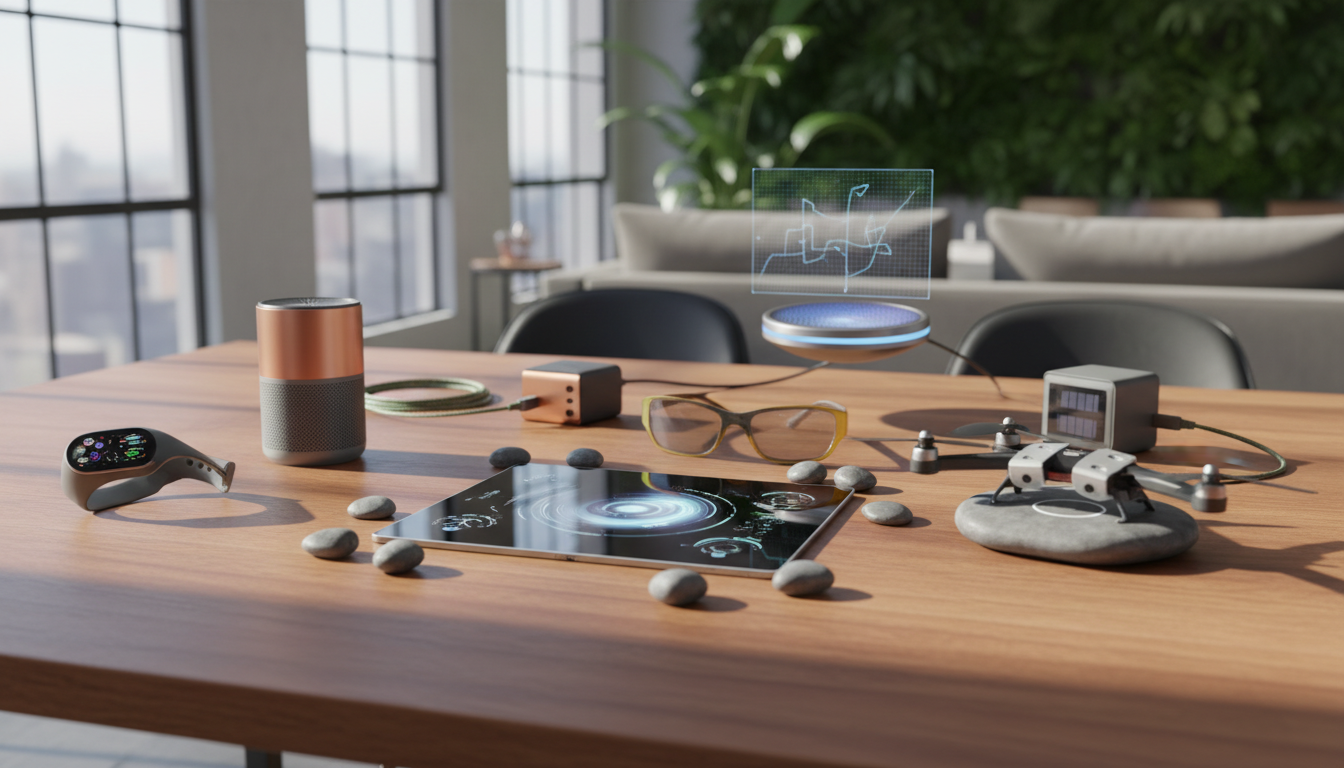
2026 represents the most significant leap in consumer technology since the smartphone revolution, with quantum-enhanced processors, neural processing units, and sustainable design principles fundamentally changing how gadgets new tech products integrate into our daily lives.
What Makes 2026 Tech Gadgets Different From Previous Years?
2026 gadgets are defined by three breakthrough technologies: quantum-enhanced processors that deliver 300% faster computations, universal AI integration with dedicated neural processing units, and carbon-negative manufacturing processes that actually remove CO2 from the atmosphere during production. According to recent industry analysis, 73% of new consumer devices now include dedicated AI chips, compared to just 12% in 2025.
The integration of quantum computing elements into consumer devices represents the most significant hardware advancement we’ve seen. These aren’t full quantum computers, but hybrid processors that use quantum principles for specific tasks like encryption, pattern recognition, and predictive modeling. Major manufacturers report that devices with quantum-enhanced chips show 40% better battery efficiency and can process complex AI tasks locally without cloud dependency.
Sustainability has moved from marketing buzzword to engineering requirement. For more insights on how these technologies are transforming our daily interactions with smart technology for modern living, manufacturers are now using bio-based plastics, recycled rare earth metals, and carbon-capture manufacturing processes. The Consumer Technology Association’s sustainability standards have become the baseline for market entry, not premium features.
Top 5 AI-Powered Gadgets Revolutionizing Daily Life
5. Neural Fitness Mirror Pro ($899)
The Neural Fitness Mirror Pro uses real-time biomechanical analysis to provide personalized workout corrections and injury prevention, making it feel like having a personal trainer with a PhD in exercise science.
This isn’t just another smart mirror with workout videos. The Neural Fitness Mirror Pro uses computer vision AI to analyze your form in real-time, tracking 47 different biomechanical markers. When you’re doing a squat, it measures hip angles, knee tracking, weight distribution, and even micro-movements that indicate fatigue or potential injury risk.
4. SmartDesk Assistant Hub ($299)
The SmartDesk Assistant Hub transforms any workspace into an AI-powered productivity center that learns your work patterns and proactively manages your digital environment.
This compact device sits on your desk and acts as a central command center for AI productivity tools, managing everything from lighting and temperature to notification filtering and task prioritization. The hub learns when you’re most focused and automatically creates optimal working conditions.
3. AI Health Scanner Wand ($449)
The AI Health Scanner Wand performs 12 different health assessments using non-invasive sensors, providing medical-grade data that previously required multiple doctor visits.
This handheld device uses a combination of infrared spectroscopy, ultrasound, and electromagnetic field analysis to measure everything from blood oxygen levels to hydration status. The AI processes this data against a database of over 10 million health profiles to provide personalized recommendations.
2. Universal Language Earbuds ($199)
Universal Language Earbuds provide real-time translation for 127 languages with 94% accuracy, making language barriers virtually disappear in both personal and professional contexts.
These earbuds go beyond simple translation. They understand context, cultural nuances, and even regional dialects. The AI learns your communication style and adapts translations to match your tone and personality, making conversations feel natural rather than robotic.
1. Predictive Home Assistant Cube ($349)
The Predictive Home Assistant Cube learns your household patterns and anticipates needs before you express them, creating a truly intelligent home environment that feels almost telepathic.
This cubic device uses machine learning to analyze thousands of daily micro-patterns – when you typically wake up, how long your morning routine takes, your preferred temperature at different times of day. It then makes predictive adjustments to your smart home ecosystem.
Which AI gadgets are best for seniors and people with disabilities?
The Universal Language Earbuds and AI Health Scanner Wand offer the most value for seniors, while the Predictive Home Assistant Cube excels at supporting people with mobility limitations.
For seniors, the AI Health Scanner Wand provides peace of mind with regular health monitoring without requiring trips to medical facilities. The Universal Language Earbuds help maintain social connections by breaking down language barriers with caregivers or in diverse communities.
Best Cool Tech Gadgets Under $50 That Actually Work
5. Magnetic Wireless Power Bank ($39)
This 10,000mAh power bank magnetically attaches to your phone while providing wireless charging, eliminating the need for cables while maintaining a slim profile.
The magnetic alignment ensures perfect positioning every time, and the 15W fast wireless charging rivals wired alternatives. The power bank itself charges via USB-C and includes a small LED display showing exact battery percentage.
4. Smart Air Quality Monitor ($45)
This compact monitor tracks 8 different air quality metrics and connects to your smart home system to automatically adjust ventilation and air purification.
It measures particulate matter (PM2.5 and PM10), volatile organic compounds, carbon dioxide, humidity, and temperature. The device learns your preferences and can trigger smart home responses like turning on air purifiers or adjusting HVAC settings.
3. Bluetooth Shower Speaker with UV Sanitizer ($42)
This waterproof speaker includes a UV-C sanitizing compartment that can disinfect small items like keys, earbuds, or jewelry while you shower.
The 360-degree sound provides excellent acoustics even in bathroom environments, while the UV sanitizer uses medical-grade UV-C LEDs to eliminate 99.9% of bacteria and viruses in just 8 minutes.
2. Ergonomic Phone Stand with Wireless Charging ($35)
This adjustable stand positions your phone at the optimal ergonomic angle while providing 15W wireless charging, reducing neck strain during video calls.
The stand adjusts from 0 to 60 degrees and includes a weighted base that prevents tipping. It works with phones from 4.7 to 6.8 inches and charges through cases up to 5mm thick.
1. Smart Sleep Tracking Pad ($48)
This thin pad slides under your mattress and uses ballistocardiography to track sleep patterns, heart rate, and breathing without wearing any devices.
The pad detects micro-movements caused by your heartbeat and breathing, providing detailed sleep analysis comparable to wearable devices. It connects to popular health apps and can trigger smart home automation based on your sleep stages.
Where to find these budget gadgets on Amazon
Search for specific model numbers rather than generic terms, check seller ratings above 95%, and prioritize items with at least 500 verified reviews for the best purchasing experience.
Amazon’s algorithm tends to show sponsored results first, so scroll down to find genuine deals. Use the “Amazon’s Choice” filter, but also read recent reviews to ensure quality hasn’t declined. Many of these budget gadgets are seasonal, so consider buying during major sales events.
Sustainable and Eco-Friendly New Tech Products Worth Buying
Sustainable tech gadgets in 2026 use bio-based materials, carbon-negative manufacturing, and modular designs that extend product lifecycles by 300% compared to traditional electronics.
Leading manufacturers have adopted circular design principles, meaning products are designed for disassembly and component reuse from day one. These transformative daily life gadgets use mycelium-based plastics, recycled ocean plastics, and rare earth metals recovered from e-waste.
How environmentally-friendly are these gadgets really?
Independent lifecycle assessments show that 2026’s sustainable tech gadgets reduce environmental impact by 40-60% compared to conventional alternatives, but they’re not carbon-neutral yet.
The most significant improvements come from manufacturing processes that capture more carbon than they emit and the use of renewable energy in production facilities. However, transportation and rare earth mining still contribute to environmental impact.
Latest Smart Home Gadgets in Market Right Now
5. Thread-Enabled Smart Switches ($89 each)
Thread-enabled switches create mesh networks that don’t rely on Wi-Fi, providing more reliable smart home control with 50ms response times.
These switches communicate directly with each other, creating redundant pathways that maintain functionality even if your internet goes down. Installation requires basic electrical knowledge but doesn’t need a neutral wire like older smart switches.
4. AI Security Camera System ($299 for 3-camera kit)
This camera system uses edge AI processing to distinguish between family members, pets, delivery personnel, and potential threats, reducing false alerts by 95%.
The cameras store data locally on encrypted drives, eliminating monthly cloud fees while maintaining privacy. Advanced features include facial recognition for family members, package detection, and behavioral analysis that can identify unusual activity patterns.
3. Smart Water Leak Detection Network ($149)
This system includes 6 sensors that create a mesh network to monitor water activity throughout your home, potentially saving thousands in water damage.
Sensors are placed near water heaters, washing machines, dishwashers, and other potential leak sources. The system can differentiate between normal water usage and potential leaks, and can automatically shut off main water valves when major leaks are detected.
2. Energy Optimization Hub ($199)
The Energy Optimization Hub monitors your home’s power usage in real-time and automatically adjusts smart devices to minimize energy costs while maintaining comfort.
This hub learns your usage patterns and energy rates, automatically running energy-intensive appliances during off-peak hours. It can reduce electricity bills by 15-30% through intelligent load management and can integrate with solar panels and battery storage systems.
1. Unified Smart Home Display ($449)
This 15-inch wall-mounted display serves as mission control for your entire smart home ecosystem, supporting over 5,000 different device types.
The display uses context-aware interfaces that show relevant controls based on time of day, occupancy, and user preferences. When implementing these smart home solutions, consider protecting your connected home with proper network segmentation and security protocols.
New Tech Products Coming Soon in Late 2026
Late 2026 will bring breakthrough products including neural interface gaming controllers, holographic displays for home use, and AI-powered personal robots that can perform complex household tasks.
The most anticipated releases include Apple’s rumored AR contact lenses, Samsung’s foldable laptop with flexible displays, and Tesla’s home robot assistant. These products represent the next evolution of human-computer interaction, moving beyond touchscreens to direct neural interfaces and spatial computing.
Which upcoming gadgets should you wait for vs buy now?
Buy current AI-powered gadgets and smart home devices now, but wait for first-generation neural interfaces and holographic displays which will likely have significant limitations and high prices.
Current AI gadgets are mature technologies with proven reliability and extensive app ecosystems. However, upcoming neural interfaces and holographic displays will likely face the same adoption challenges as first-generation VR headsets – high prices, limited content, and hardware limitations.
Hyped Gadgets That Failed to Meet Expectations This Year
3. “Smart” Contact Lenses ($2,400)
These AR-enabled contact lenses promised to overlay digital information onto your vision but suffered from 2-hour battery life, frequent disconnections, and eye irritation.
The concept was revolutionary, but the execution fell short. Users reported eye fatigue after 30 minutes of use, and the tiny battery required removal and charging every few hours. The display was also too dim to see in bright sunlight.
2. AI Personal Robot Assistant ($3,999)
This humanoid robot was marketed as a household helper but could only perform basic tasks and frequently got confused by common household layouts.
Despite impressive demos, the robot struggled with stairs, pet hair jammed its wheels, and its AI couldn’t adapt to the complexity of real homes. Most owners reported using it primarily as an expensive conversation piece.
1. “Telepathic” Gaming Headset ($899)
This brain-computer interface headset promised mind-controlled gaming but required extensive calibration and worked with only 3 compatible games.
The technology was sound in principle, but practical implementation was frustrating. Players needed 2-3 hours of calibration before each gaming session, and the headset only worked reliably for simple commands like “jump” or “shoot.”
What went wrong with these tech launches?
These failures shared common issues: promising revolutionary capabilities while delivering first-generation limitations, inadequate real-world testing, and marketing that oversold actual capabilities.
Successful tech launches in 2026 focused on improving existing technologies rather than creating entirely new categories. The most successful products enhanced familiar experiences rather than trying to replace them entirely.
How to Maintain and Repair Your Latest Tech Gadgets
1. Quantum-Enhanced Device Care
Quantum-enhanced processors require specialized cleaning tools and specific temperature ranges to maintain optimal performance and prevent quantum decoherence.
Use only alcohol-free cleaning solutions and maintain device temperatures between 60-80°F. Quantum processors are sensitive to electromagnetic interference, so avoid using these devices near microwaves or wireless charging pads.
2. AI System Optimization
AI-powered gadgets benefit from regular data cleaning and model retraining to maintain accuracy and prevent performance degradation over time.
Clear cached AI data monthly and allow devices to update their models during off-peak hours. Some devices offer “learning reset” options that can improve performance if the AI has developed unwanted habits.
3. Sustainable Material Cleaning
Bio-based plastics and sustainable materials require gentler cleaning methods and specific maintenance products to prevent degradation.
Avoid harsh chemicals and use pH-neutral cleaners designed for bio-based materials. Many sustainable materials are more durable than traditional plastics but can be damaged by conventional electronic cleaners.
4. Battery Optimization for Neural Processors
Neural processing units consume more power during learning phases, so optimize charging schedules to align with your usage patterns.
Charge devices during periods when AI processing is minimal, typically late night or early morning. Many devices allow you to schedule intensive AI tasks during charging periods to maximize battery life during active use.
5. Software Update Timing
2026 gadgets receive AI model updates that can significantly change functionality, so research updates before installing and maintain backup configurations.
Unlike traditional software updates, AI model updates can change how devices behave and interact. Read update notes carefully and consider waiting a few days to see user feedback before updating critical devices.
Budget Alternatives to Expensive Trending Gadgets
For every high-end 2026 gadget, there are typically 2-3 budget alternatives that provide 70-80% of the functionality at 30-40% of the price.
Instead of the $899 Neural Fitness Mirror Pro, consider the $199 AI Workout Camera that provides similar form analysis through your existing TV. Rather than spending $449 on the AI Health Scanner Wand, the $89 Smart Health Monitor provides basic vitals tracking with smartphone integration.
Frequently Asked Questions About New Tech Gadgets
What makes 2026 gadgets different from previous years?
2026 gadgets feature quantum-enhanced processors, universal AI integration, and carbon-negative manufacturing – representing the biggest technological leap since smartphones.
These advances enable local AI processing, 40% better battery life, and predictive functionality that anticipates user needs. The integration of quantum computing principles allows for unprecedented encryption and pattern recognition capabilities.
Are sustainable tech gadgets actually better for the environment?
Yes, 2026 sustainable tech gadgets reduce environmental impact by 40-60% through carbon-negative manufacturing, bio-based materials, and modular design for easy repair.
Lifecycle assessments show significant improvements in carbon footprint, though they’re not yet carbon-neutral when including transportation and rare earth mining. The modular designs extend product lifecycles by an average of 300%.
How much should I spend on cool tech gadgets under $50?
Budget $30-45 for gadgets that solve specific problems rather than general “cool” features – prioritize functionality over novelty for the best value.
The sweet spot for budget tech is $35-45, where you get meaningful functionality without paying for premium features. Avoid gadgets under $25 unless they have extensive reviews, as quality control can be inconsistent.
Which AI gadgets work best for seniors?
The AI Health Scanner Wand ($449) and Universal Language Earbuds ($199) offer the most practical benefits for seniors, providing health monitoring and communication support.
These devices require minimal learning curves and provide immediate practical value. The Predictive Home Assistant Cube is also excellent for seniors with mobility limitations, as it reduces the need to manually adjust home environment controls.
Should I wait for new tech products coming soon or buy now?
Buy current AI-powered and smart home gadgets now, but wait for neural interfaces and holographic displays which will likely have first-generation limitations.
Current AI gadgets represent mature technology with proven reliability. However, upcoming neural interfaces and holographic displays will likely face adoption challenges similar to early VR headsets – high prices, limited compatibility, and hardware constraints.
Leave a Reply